Montevideo 🇺🇾 - Sep. 24, 2025 | Unmasking Argentina’s Economic Missteps
Argentina's Lithium Rush: Shining Promise or Fool's Gold?
Dear readers,
imagine a land brimming with one of the world's most coveted resources—lithium, the "white gold" powering our electric future. Argentina is touting its vast deposits as a ticket to economic stardom, with bold campaigns promising billions in exports and a green energy revolution.
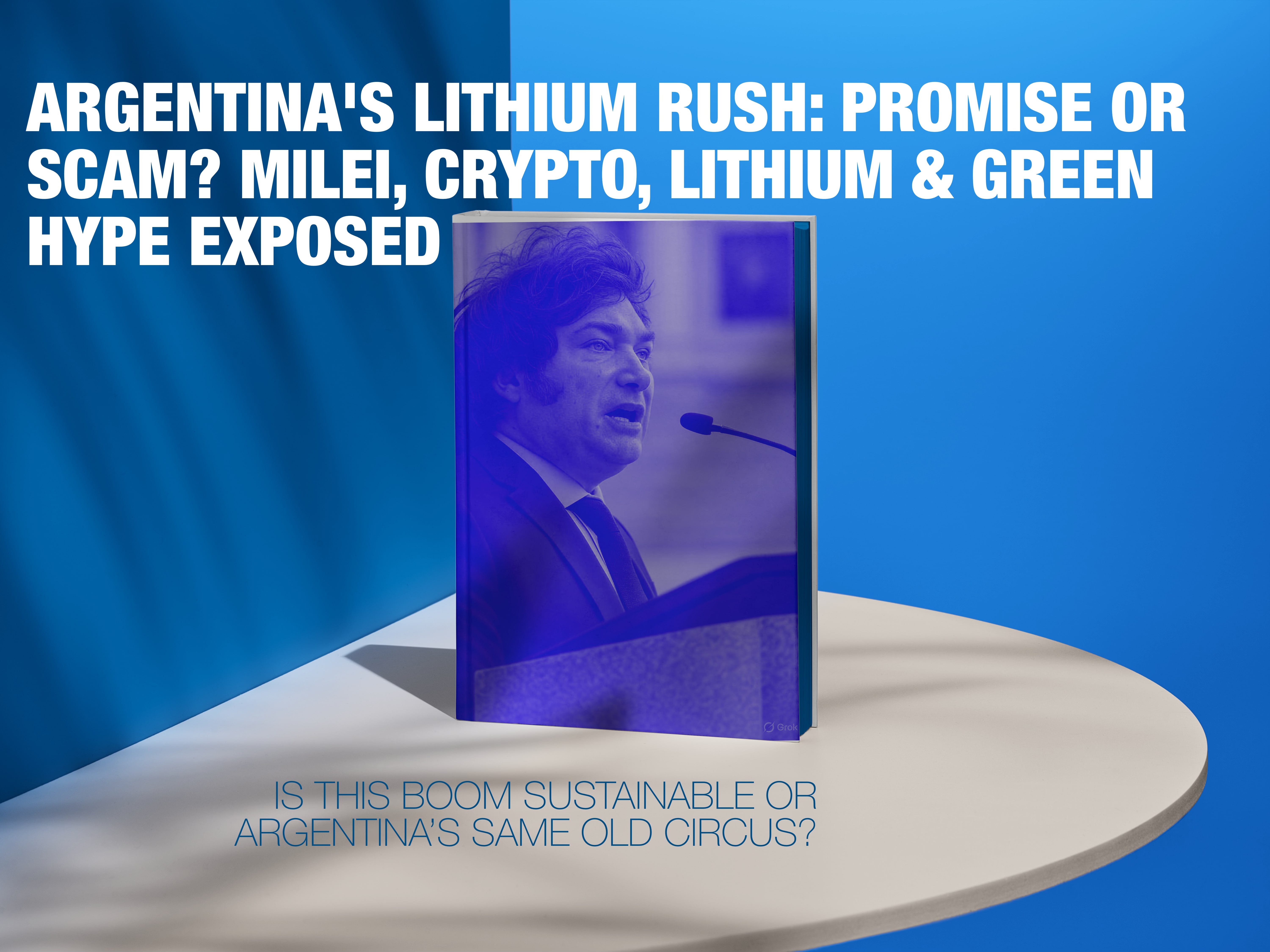
But let's chat about this like we're grabbing coffee:
Is this a genuine boom, or just slick marketing masking deeper troubles?
As someone who's dug into the details (pun intended), I have strong opinions here—this libertarian-fueled frenzy risks turning opportunity into exploitation. Hold tight; we'll unpack the hype, highlight the pitfalls, and brainstorm smarter paths forward. After all, true progress isn't about "may the strongest prevail"—it's about building sustainably for everyone.
The Grand Lithium Campaign - Hype Meets Reality
Milei's Bold Push: From $1.7B to $5B Exports?
Argentina's government under President Javier Milei has launched an aggressive push to position the country as a lithium powerhouse. With the Lithium Triangle (shared with Bolivia and Chile) holding over 50% of global reserves, officials are projecting export growth from US$ 1.7 billion in 2022 to a whopping US$ 5 billion by 2025, backed by a US$ 7 billion investment plan.
Projects like Rio Tinto's Rincón Lithium expansion and the Lithium Argentina-Ganfeng joint venture are ramping up, with feasibility studies eyeing production boosts by year's end. It's motivating stuff—think of the jobs, the tech advancements, and the role in combating climate change!
But here's where I pause and raise an eyebrow (humorously, of course—because who doesn't love a good resource rush comedy?).
Many of these deposits aren't yet internationally recognized under strict standards like JORC or NI 43-101, relying instead on preliminary estimates that could inflate hype without solid backing.
Exploration is ongoing, sure—NOA Lithium just kicked off its 2025 program at Rio Grande—but critics argue the campaign is more marketing sizzle than substantive steak. Private financing is pouring in, yet environmental watchdogs call it "anything but green," with disputes over water use and Indigenous rights simmering in places like Salinas Grandes.
In my view, this isn't just oversight; it's a recipe for rushed development that could backfire spectacularly.
The Opaque Underbelly - Legal Murk and "Strongest Prevail" Mentality
Indigenous Protests and Water Wars in Salinas Grandes
Diving deeper, the legal landscape around these deposits is as clear as mud—opaque ownership claims, overlapping concessions, and regulatory loopholes abound. Community resistance is growing, with exploration proceeding amid protests over environmental impacts and lack of consultation.
Social Media Fury: Foreign Takeovers Eroding Sovereignty?
This fits the libertarian zeal of Milei's administration: a "may the strongest prevail, whatever the cost" ethos that prioritizes deregulation over safeguards.
It's proactive in attracting investors, yes, but at what price?
We're seeing echoes on social media, where users decry foreign takeovers of lithium assets by American and Israeli firms, potentially eroding national sovereignty.
Atómico3
Stay tuned, because Argentina’s economic saga is serving up another chapter of chaos, and this time it’s cloaked in the glitzy veneer of cryptocurrency. The recent suspension of Atómico3 by the Comisión Nacional de Valores (CNV) for suspected fraud on mid-July, the $LIBRA crypto scandal that shook the nation, and Argentina’s failure to meet International Monetary Fund (IMF) requirements paint a grim picture.
And let's not sugarcoat it—this environment has bred opportunists. Enter Atómico3, a company that tokenized lithium assets on blockchain platforms like Cardano, promising investors a slice of the pie.
Sounds innovative, right?
But it projected a criminal business model, defrauding investors out of over USD 683 million through alleged scams involving unverified claims and misinformation campaigns. Argentina's National Securities Commission (CNV) has cracked down on such lithium tokenization frauds, highlighting risks in this Wild West of crypto-mining hybrids.
Pablo Rutigliano's complaint blew the lid off, exposing aggravated fraud that preyed on eager backers. If this doesn't scream "buyer beware," I don't know what does. Far from being isolated incidents, these events are symptoms of a deeper, decades-long pattern of financial and fiscal mismanagement that continues to plague Argentina. It’s time to cut through the hype and call this what it is:
The same old Argentine economic circus, now with a blockchain twist.
Let’s dive into the mess and explore why this is less about crypto innovation and more about Argentina’s inability to break free from its self-inflicted economic quagmire.
Atómico3: A Lithium Fantasy Built on Sand
Let’s start with the latest fiasco: Atómico3, a Paraguayan crypto startup that promised investors a golden ticket to the lithium boom.
CNV Crackdown - No Permits, No Problem?
Their pitch?
AT3 tokens, supposedly backed by lithium reserves in San Juan, Argentina, offering a jaw-dropping 30% annual return for as little as US$ 100.
Sounds like a dream, right?
Wrong.
The CNV pulled the plug on July 14, 2025, suspending Atómico3’s Provider of Virtual Asset Services (PSAV No. 103) registration and filing a criminal complaint for suspected fraud under Articles 172 and 177 of Argentina’s Penal Code.
Why?
Investor Nightmares: 30% Returns or Desert Mirage?
Because Atómico3 had no mining permits, no verified lithium reserves, and no evidence to back their claims. Investors reported withdrawal issues, platform errors, and a sinking realization that their “lithium-backed” tokens were as real as a desert mirage.
This isn’t just a case of a shady startup. It’s a glaring example of Argentina’s failure to enforce robust oversight in its rush to embrace crypto innovation. The CNV’s PSAV registry, introduced in 2024 to align with Financial Action Task Force (FATF) standards, was supposed to ensure transparency. Yet, Atómico3 slipped through the cracks, raising questions about the regulator’s ability to vet operators in a market desperate for quick fixes to chronic economic woes. How did a company with no tangible assets or permits operate under the CNV’s nose?
The answer lies in Argentina’s long-standing tradition of turning a blind eye to financial shenanigans until they explode.
The $LIBRA Debacle: A Presidential Pump-and-Dump?
If Atómico3 is a sideshow, the $LIBRA scandal is the main event. In February 2025, President Javier Milei, a self-proclaimed libertarian champion of economic freedom, took to X to promote $LIBRA, a meme coin pitched as a lifeline for Argentina’s small businesses.
From Milei's X Hype to $250M Crash
The result?
A meteoric price surge from near zero to US$ 5, followed by a catastrophic crash to under US$ 1 within hours. Investors lost a collective US$ 250 million, with 86% of traders left holding worthless tokens. The fallout was swift: over 100 fraud complaints, a federal judge’s investigation, and calls for Milei’s impeachment.
Cryptogate Echoes: 2001 Corralito 2.0?
Milei’s defense?
He claimed he acted in “good faith,” deleted his post, and distanced himself from $LIBRA, blaming a Singapore-based startup, KIP Protocol, for the mess.
Yet, evidence suggests insiders orchestrated a pump-and-dump scheme, with early stakeholders cashing out millions before the crash. The scandal, dubbed “Cryptogate,” exposed not just Milei’s reckless endorsement but also Argentina’s vulnerability to hype-driven financial schemes. The government’s decision to shut down the investigative unit probing $LIBRA only deepened suspicions of a cover-up, further eroding public trust.
Read blog about Cryptogate:
This isn’t an isolated misstep. It’s a textbook case of Argentina’s elite leveraging their influence for personal gain while leaving ordinary citizens to bear the losses. Milei’s libertarian rhetoric promised a break from Argentina’s cronyism, but $LIBRA suggests otherwise. The scandal mirrors historical patterns of political insiders profiting from economic desperation, from the 1980s debt crisis to the 2001 corralito.
It’s the same story, just with a crypto hashtag.
IMF Requirements: Promises Broken, Again
$45B Bailout at Risk - Crypto Wild West vs. FATF Rules
Zoom out, and the picture gets uglier. Argentina’s ongoing US$ 45 billion IMF bailout, secured in 2022, came with strings attached: reduce fiscal deficits, stabilize the peso, and—crucially—discourage cryptocurrency use to prevent money laundering and capital flight. Yet, Argentina has failed to deliver. The IMF’s push for stronger crypto regulation clashed with Milei’s pro-crypto stance, creating a policy mess. The $LIBRA scandal, followed by Atómico3’s collapse, proves the IMF’s concerns were spot-on: Argentina’s crypto market is a Wild West, ripe for exploitation.
Instead of tightening oversight, Argentina’s government has doubled down on deregulation, touting blockchain as a cure for its economic ills. This defiance of IMF requirements risks jeopardizing future bailout tranches, leaving Argentina’s economy teetering on the edge. With inflation still hovering around the highest in the World and the peso in freefall, the failure to meet IMF targets isn’t just negligence—it’s a continuation of Argentina’s decades-long habit of kicking the fiscal can down the road.
The Root Cause: Argentina’s Chronic Mismanagement
Let’s connect the dots.
Atómico3’s “lithium fantasy,” $LIBRA’s pump-and-dump, and Argentina’s IMF non-compliance aren’t isolated incidents—they’re symptoms of a systemic disease.
From Hyperinflation to Blockchain Bubbles
Argentina has a storied history of financial mismanagement, from hyperinflation in the 1980s to the 2001 default that left millions destitute. Governments, whether Peronist, conservatives, neo-liberals, radical, or libertarian, have consistently prioritized short-term populism or personal gain over structural reform.
The crypto boom was supposed to be Argentina’s chance to leapfrog into the future, but instead, it’s become a new playground for the same old tricks.
The CNV’s late reaction to Atómico3 and the government’s mishandling of $LIBRA reflect a deeper failure: a lack of institutional rigor. Regulators are underfunded, understaffed, and often politically compromised. The PSAV registry, meant to bring order, is toothless without proactive enforcement.
Meanwhile, political leaders like Milei fuel speculative frenzies, knowing Argentina’s desperate population—five million of whom use crypto daily to escape inflation—will take the bait.
This isn’t innovation; it’s exploitation.
Argentina’s crypto scandals are just the latest iteration of a cycle where elites hype “solutions” (be it dollarization, privatization, or now blockchain) only to leave citizens holding the bag when the bubble bursts. The $LIBRA crash cost investors US$ 250 million; Atómico3’s fallout is still unfolding.
Who benefits?
Insiders, bots, and connected players and friends of Milei who cash out early, just like in the 1990s privatization scams or the 2010s Ponzi schemes.
Milei's Battle Cry: Heroes or Fraudsters?
Tax Evasion as Heroism - Fueling Lithium Scams?
This chaos aligns eerily with President Milei's rhetoric. He's famously called tax evaders "heroes" for resisting what he deems "robbery" by the state, even facing criminal complaints for praising evasion. Plans to relax anti-evasion curbs aim to lure hidden dollars back into the economy, but critics argue it incentivizes fraud. In a lithium context, this mindset fosters an anything-goes arena where companies like Atómico3 thrive—until they don't.
My clear opinion?
Glorifying financial shortcuts undermines trust and invites scams. It's not heroic; it's hazardous.
A Call for Accountability
Argentina deserves better. The promise of crypto—decentralized, transparent, and empowering—has been hijacked by the same mismanagement that’s crippled the country for decades.
4 Steps to Tame the Crypto Circus
Here’s what needs to happen:
Strengthen Regulation: The CNV must move beyond reactive measures and proactively vet PSAVs. Independent audits and public disclosures of asset backing are non-negotiable.
Hold Leaders Accountable: Milei’s role in $LIBRA demands a transparent investigation, not a whitewash. Political endorsements of financial products must face legal scrutiny.
Align with IMF Standards: Argentina cannot afford to lose IMF support. Complying with anti-money laundering and crypto regulations is critical to stabilizing the economy.
Educate Investors: Public campaigns should teach Argentines to spot red flags like unrealistic returns (looking at you, Atómico3’s 30%) and unverified claims.
Thinking Outside the Box - Solutions for a Sustainable Future
But hey, let's pivot to solutions—because dwelling on problems without fixes is like mining without a map.
Hybrid Tokenization + Green Extraction: Rio Tinto Done Right
Argentina could lead innovatively by adopting hybrid models: regulated blockchain tokenization with mandatory international audits to ensure transparency and prevent fraud. Partner with global bodies for deposit certification, prioritizing community-led impact assessments to clarify legal opacity. Invest in green tech, like direct lithium extraction, to minimize environmental costs—Rio Tinto's Rincón project is a start, but scale it ethically.
Build Batteries, Not Just Mine 'Em
Proactively, diversify beyond raw exports: Build domestic battery manufacturing hubs to capture more value.
And for investors like you, dear reader?
Demand due diligence—look for JORC-compliant reports and avoid hype-driven tokens. Together, we can motivate a lithium legacy that's prosperous and principled.

The Verdict: Same Circus, New Clowns
Argentina’s crypto scandals aren’t a glitch in the blockchain—they’re a feature of a broken system. Atómico3 and $LIBRA are not anomalies; they’re the inevitable result of a country that’s failed to learn from its past. The promise of digital assets has been squandered by the same greed, incompetence, and regulatory apathy that have defined Argentina’s economic history. Until the country confronts its addiction to quick fixes and cronyism, these scandals will keep coming, whether in pesos, dollars, or tokens.
So, what’s next?
Another crypto scheme?
Another IMF bailout?
Or will Argentina finally break the cycle?
What do you think—ready to hold leaders accountable?
Drop your thoughts; let's dialogue on turning this rush into real gold. I’m not holding my breath, but I’m rooting for change. Share your thoughts below—how can Argentina escape this financial déjà vu?
Meet “TangoTech”, team member of the dynamic duo behind the innovative crypto currency project for Argentina: CryptoARGVault.
"TangoTech" is a visionary young entrepreneur from Cordoba, Argentina. Her career in finance and economics laid the foundation for her deep understanding of the unique challenges faced by the Argentine economy. TangoTech believes in the potential of blockchain to reshape financial landscapes and empower individuals. Her interest in crypto stems from a desire to create inclusive financial solutions that can transcend geographical boundaries and traditional financial barriers. TangoTech is passionate about community engagement and user experience design. She thrives on building bridges between technology and real-world applications. In her free time, TangoTech is an enthusiastic sustainable whine growing professional and loves exploring Argentina's rich cultural heritage.