Montevideo🇺🇾 - Sept. 2nd, 2025
Dear readers,
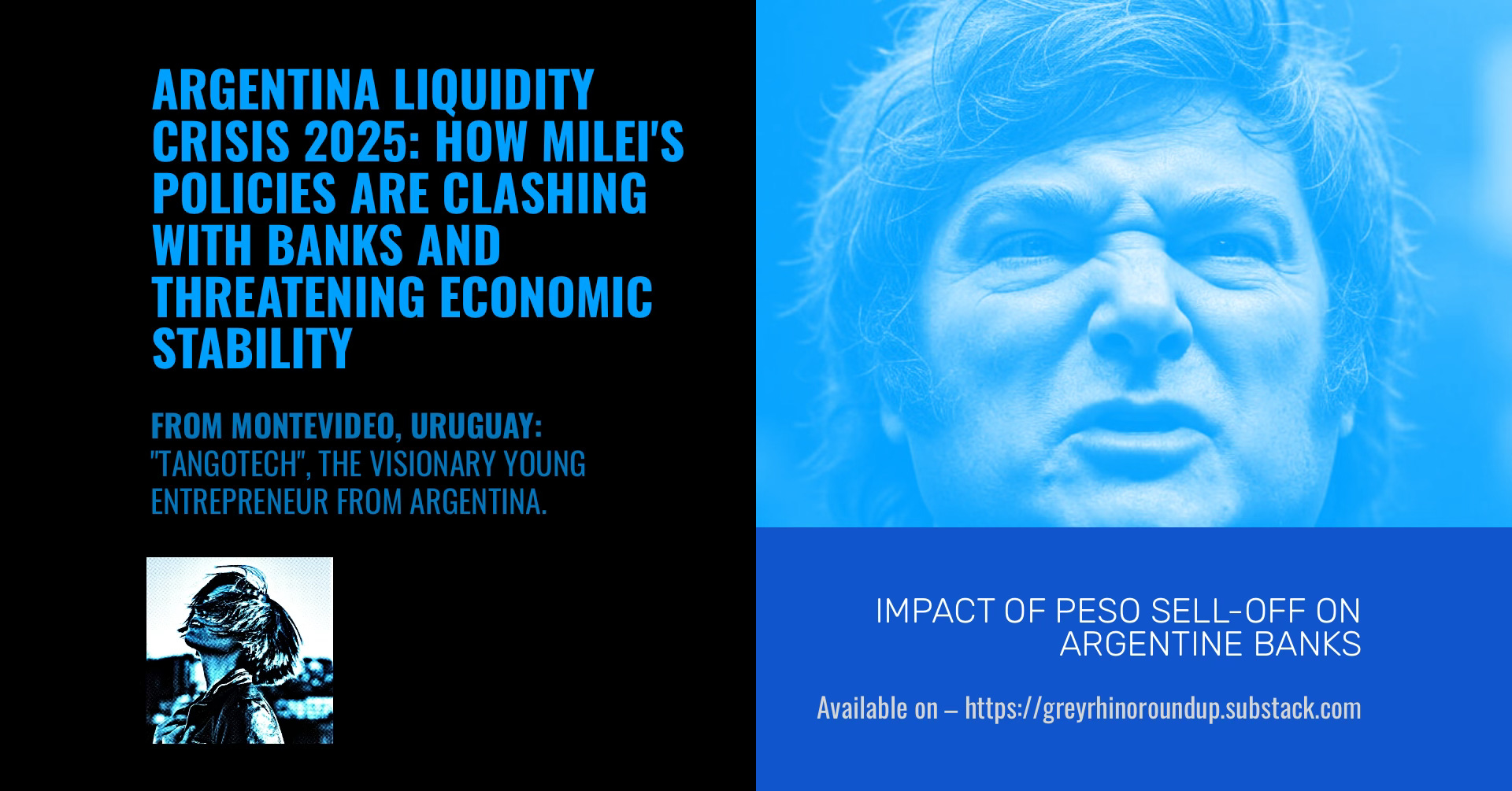
buckle up because I’m diving headfirst into the chaotic world of Argentine economics under President Javier Milei. If you've been following the headlines, you know it's not just a bump in the road—it's a full-blown pothole apocalypse. Today, I’m pulling no punches in critiquing this latest fiasco: a liquidity crisis that's pitting Milei against the very banks that once cheered him on.
As a passionate observer of global economies, I believe it's high time we dissect this mess with a critical eye, infuse some much-needed innovation, and chart a path forward. Let's talk this through like old friends over coffee—except this brew is bitter, and the laughs are laced with irony.

Argentina Liquidity Crisis 2025: Milei's Policies vs. Banks
First off, let's set the stage. Argentina, that perennial poster child for economic volatility, is once again starring in its own tragicomedy. President Milei, the self-proclaimed anarcho-capitalist wizard who burst onto the scene with promises of slashing inflation and deregulating everything in sight, is now clashing with the banking sector. These banks were his allies, folks—aligned with his political goals like loyal sidekicks in a bad superhero movie.
But oh, how the tables have turned!
New liquidity measures aimed at halting a peso sell-off have them crying foul, claiming their profitability is under siege. And honestly, who can blame them? When your government's "fixes" feel more like financial waterboarding, it's bound to breed resentment.

The Roots of the Crisis: Peso Sell-Off and Government Measures
Picture this:
In late July, the government yanked pesos from the market to squash dollar demand, triggering a liquidity crunch that sent real interest rates soaring into double digits.
The peso?
It plummeted over 12% last month—its worst dive since Milei's infamous December 2023 devaluation.
That's not progress; that's regression dressed up as bold reform.
Then, on August 13, the government could only refinance 61% of maturing peso debt, resorting to dipping into central bank reserves and flooding the economy with about 6 trillion pesos (that's US$ 4.6 billion for those keeping score).
The result?
Bank Backlash: Why Profitability Is Under Siege
Skyrocketing rates—overnight repos at 80%, one-month LECAP notes at 71%, and top-rated companies shelling out over 100% for short-term cash. If this isn't a recipe for economic suffocation, we don't know what is.
The central bank's response?
Slap on daily reserve requirements instead of monthly ones, hike penalties for noncompliance, and essentially force banks to hoard pesos in a liquidity-starved market. Bank execs are fuming, calling these rules "inefficient and costly." They're even drafting a manifesto of recommendations to lob at the central bank. During a virtual powwow on Aug. 19, 2025, over 100 investors from heavyweights like Banco Galicia, Santander, Macro, and BBVA grilled Darío Stefanelli, the central bank's issuance head.
His defense?
Milei's Rhetoric vs. Reality—What Went Wrong?
A meek "I just explain the rules🤡."
Come on, that's not leadership; that's bureaucratic deflection at its finest. It's like a referee in a rigged game saying, "Hey, don't blame me for the rules—I just blow the whistle!"🕵🏼
Milei's rhetoric doesn't help. In a July 28 broadcast, he snarled, "What did they expect? That I would release money so they could attack the exchange rate? No way."
Bold words, Mr. President, but they ring hollow when your policies are inflating costs and eroding trust. Economy Minister Luis Caputo doubled down on X (formerly Twitter), vowing to absorb excess pesos through reserves or other tools whenever rollovers falter. Sure, these measures clawed back some peso value and shielded inflation efforts ahead of midterms, but at what cost? Bank stocks have tanked up to 8.2% in New York over five days, signaling market jitters that scream "unsustainable!"
Let's be brutally honest here: This isn't innovative governance; it's reactionary firefighting that's scorching the very institutions needed for stability.
Milei's libertarian zeal, while refreshing in theory, is proving disastrous in practice. Argentina's history of hyperinflation, defaults, and currency woes demands nuanced, collaborative strategies—not unilateral decrees that alienate key players. It's humorous in a dark way:
The man who railed against the "political caste" is now at war with the financial elite he once courted. Talk about biting the hand that feeds the economy!
Innovative Solutions: Thinking Outside the Austerity Box
But enough doom and gloom—we are solution-oriented at heart, and we want to motivate you, dear reader, to demand better.
What if we thought outside the box?
Hybrid Economic Models for Argentina
Imagine Milei pivoting to a hybrid model: Blend his deregulation with targeted incentives for banks to invest in productive sectors like tech or renewables, rather than punishing them with draconian reserves. Proactively engage international partners for dollar swaps or IMF-backed buffers to ease liquidity without domestic carnage.
And here's a wild idea—crowdsource economic policy via transparent public forums, turning citizens into stakeholders instead of spectators. Argentina has immense potential: Vast resources, talented people, and a resilient spirit. Milei could harness that by fostering dialogue, not division. But there it is again, that feeling: nothing really new on the Rio de la Plata.

In my opinion, this crisis underscores a fundamental flaw: Leadership that's more performative than pragmatic. If Milei doesn't course-correct soon, expect more tensions, deeper recessions, and electoral backlash. But hey, let's end on a proactive note—Argentina, you've survived worse. Rally for reforms that unite, not fracture.
What do you think, readers? Drop your thoughts in the comments; let's dialogue our way to solutions. Together, we can turn this economic circus into a triumph. Stay motivated, stay critical!

Meet “TangoTech”, team member of the dynamic duo behind the innovative crypto currency project for Argentina: CryptoARGVault.
"TangoTech" is a visionary young entrepreneur from Cordoba, Argentina. Her career in finance and economics laid the foundation for her deep understanding of the unique challenges faced by the Argentine economy. TangoTech believes in the potential of blockchain to reshape financial landscapes and empower individuals. Her interest in crypto stems from a desire to create inclusive financial solutions that can transcend geographical boundaries and traditional financial barriers. TangoTech is passionate about community engagement and user experience design. She thrives on building bridges between technology and real-world applications. In her free time, TangoTech is an enthusiastic sustainable whine growing professional and loves exploring Argentina's rich cultural heritage.