Montevideo, 🇺🇾, Sep. 5th, 2025
Dear Readers,
let's cut straight to the chase: Argentina's economy is teetering on the edge of yet another abyss, and President Javier Milei's bold promises are starting to look like just another chapter in the country's endless saga of fiscal folly. As we sit here in 2025, reflecting on the latest data, it's hard not to feel a surge of frustration mixed with a dash of dark humor—after all, …
… how many times can one nation reinvent the wheel of economic mistrust before it finally rolls off a cliff?
But fear not; this isn't just a rant. I'm here to dissect the mess with a critical eye, call out the failures, and proactively chart a path forward. Because, folks, criticism without solutions is like a tango without rhythm—pointless and exhausting.
Join me as we unpack this, shall we?
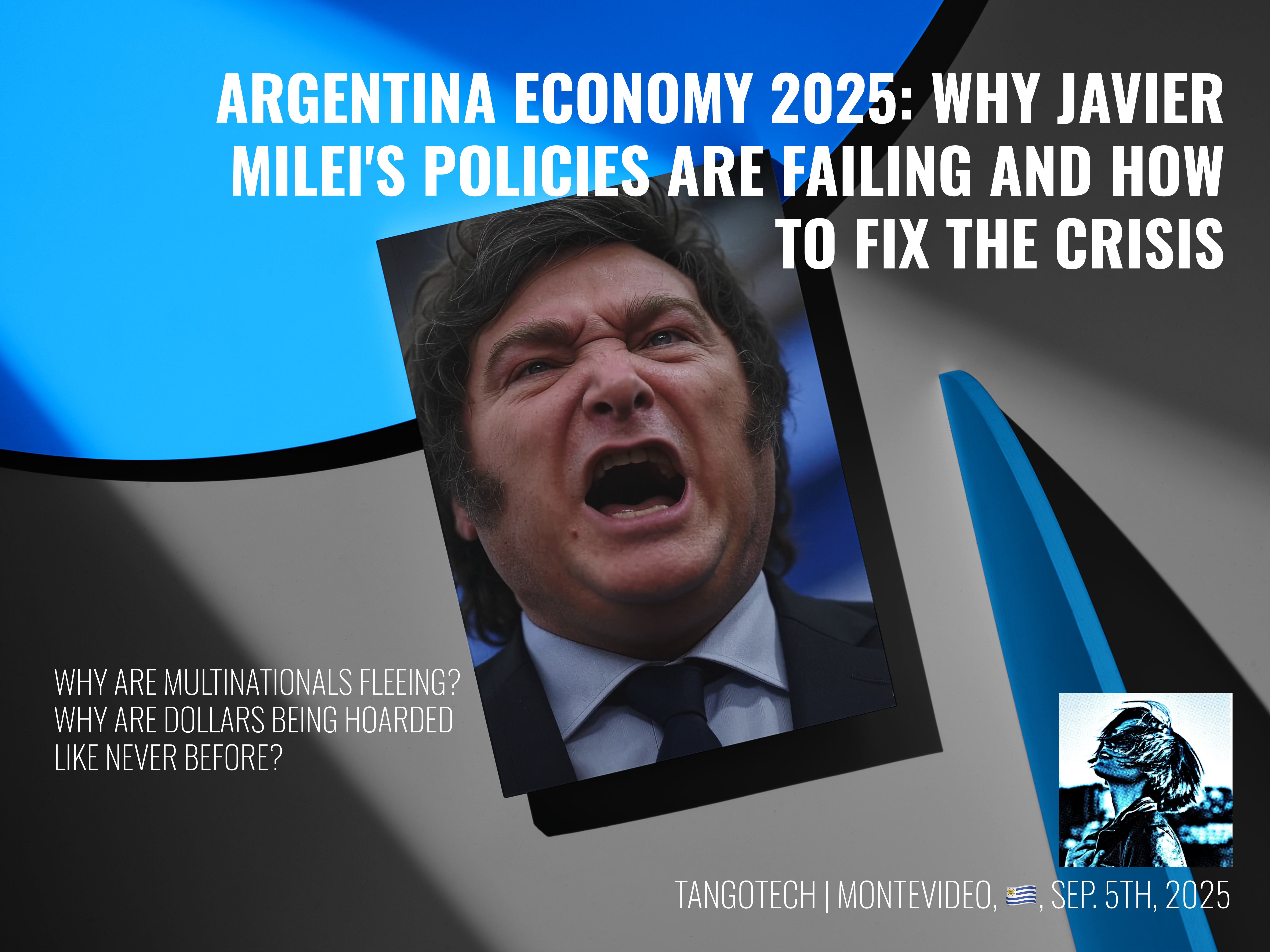
The Dollar Dance: Same Old Steps, New Leader
Picture this: Javier Milei, the self-proclaimed disruptor, announcing interventions in the foreign exchange market to tame the dollar and stave off inflation spikes ahead of the October elections. Sound familiar?
It should—it's the exact playbook his predecessors dusted off time and again. Critics like me can't help but roll our eyes; this isn't innovation, it's desperation dressed as strategy.
By artificially suppressing the dollar, Milei's administration is merely papering over cracks in a foundation that's been crumbling for decades. And let's be clear: this isn't just a minor misstep. It's a blatant admission that, despite slashing inflation, achieving a fiscal surplus, and snagging that shiny new IMF loan, the economy remains as fragile as a house of cards in a Buenos Aires gale.
Why the criticism?
Because repeating history's mistakes isn't leadership—it's laziness.
Mistrust in Argentina isn't some abstract concept; it's deeply rooted, as fresh Central Bank data reveals. Ordinary Argentines and businesses are hoarding dollars like squirrels prepping for winter, amassing a whopping US$14.2 billion through July—the highest since the chaotic end of Mauricio Macri's term in 2019. This surge kicked off in April when exchange controls eased, proving that when given a sliver of freedom, people vote with their wallets against the peso. It's a damning referendum on confidence, happening right before Sunday's legislative elections in Buenos Aires province, which everyone knows is a litmus test for Milei's national prospects. If this doesn't scream "systemic failure," I don't know what does.
The Great Exodus: Multinationals Fleeing the Sinking Ship
Now, let's talk about the real gut-punch: foreign direct investment (FDI) is in the red, clocking in at a negative US$1.37 billion as of July. Despite Milei's much-touted Large Investment Incentive Regime (RIGI) from just a year ago, multinationals are packing their bags faster than tourists dodging a summer storm. Spain's Telefónica is the latest to bail, joining a parade that includes Petronas, Exxon, P&G, Mercedes-Benz, HSBC, Prudential, Clorox, and Xerox—13 giants in total since this administration began, per local media and consultancy surveys.
Humor me for a second: If Argentina were a party, these companies are the guests sneaking out the back door before the bill arrives. Their exodus isn't random; it's a calculated retreat from a landscape poisoned by uncertainty. They see no "horizon of economic stabilization," as the reports bluntly put it, where profitability isn't a pipe dream. And it's not just foreigners—local firms are suffering too. Take Celulosa Argentina, the pulp and paper stalwart that filed for bankruptcy protection on September 1 after defaulting on debts. In their lawsuit, they didn't mince words: they blamed Milei's policies for fostering a "poor business environment." Rising borrowing costs, savage public spending cuts, and an overvalued peso that's kneecapping export competitiveness? That's a recipe for disaster, not recovery.
We're witnessing the largest wave of corporate defaults since 2020, and it's hitting agriculture and industry hardest. My opinion? This isn't bad luck; it's bad policy, plain and simple.
Election Jitters and the Long Road Ahead
As polls for Sunday's vote paint an inconclusive picture—some favoring the Kirchnerist opposition, others tilting toward Milei's camp despite that escalating corruption scandal involving his sister—the dollar's fate hangs in the balance. A strong showing for Milei's party could see it dip next week, offering a fleeting breather. But let's not kid ourselves: win or lose, Argentina's medium- and long-term outlook is bleak. Private capital is playing hard to get, reluctant to invest in a nation where mistrust reigns supreme.
Here's where I get proactive, because dwelling on doom without a blueprint is unproductive. We need to think outside the box—innovatively and boldly. First, Milei must pivot from short-term forex fixes to transparent, trust-building reforms. Imagine a "Confidence Compact": a public-private partnership where the government commits to independent audits of economic data, incentivizes local reinvestment through tax breaks tied to job creation, and partners with tech innovators for blockchain-based currency tracking to curb hoarding. Humorously, we could call it "Dollar Detox"—a program to wean the nation off its greenback addiction with gamified apps rewarding peso loyalty.
Second, to stem the multinational bleed, expand RIGI into a "Global Gateway Initiative" that offers not just incentives but guarantees—political risk insurance backed by international bodies, streamlined regulations via AI-driven approvals, and eco-innovation grants to attract green investors. For local firms like Celulosa, create a "Resilience Fund" pooling IMF loans with private equity to refinance debts under favorable terms, conditional on sustainable practices.
And readers, let's dialogue:
What if Argentina leveraged its cultural grit—the same spirit that birthed tango and Messi—to rebrand as a hub for resilient entrepreneurship?
Expressing my clear opinion, Milei's libertarian flair has potential, but it's squandered on old tricks. We must demand better—proactively, collectively. Drop your thoughts in the comments; together, we can motivate change.
In solidarity and solutions, Your Critical Economic Watchdog—today from Montevideo🇺🇾

Meet “TangoTech”, team member of the dynamic duo behind the innovative crypto currency project for Argentina: CryptoARGVault.
"TangoTech" is a visionary young entrepreneur from Cordoba, Argentina. Her career in finance and economics laid the foundation for her deep understanding of the unique challenges faced by the Argentine economy. TangoTech believes in the potential of blockchain to reshape financial landscapes and empower individuals. Her interest in crypto stems from a desire to create inclusive financial solutions that can transcend geographical boundaries and traditional financial barriers. TangoTech is passionate about community engagement and user experience design. She thrives on building bridges between technology and real-world applications. In her free time, TangoTech is an enthusiastic sustainable whine growing professional and loves exploring Argentina's rich cultural heritage.