


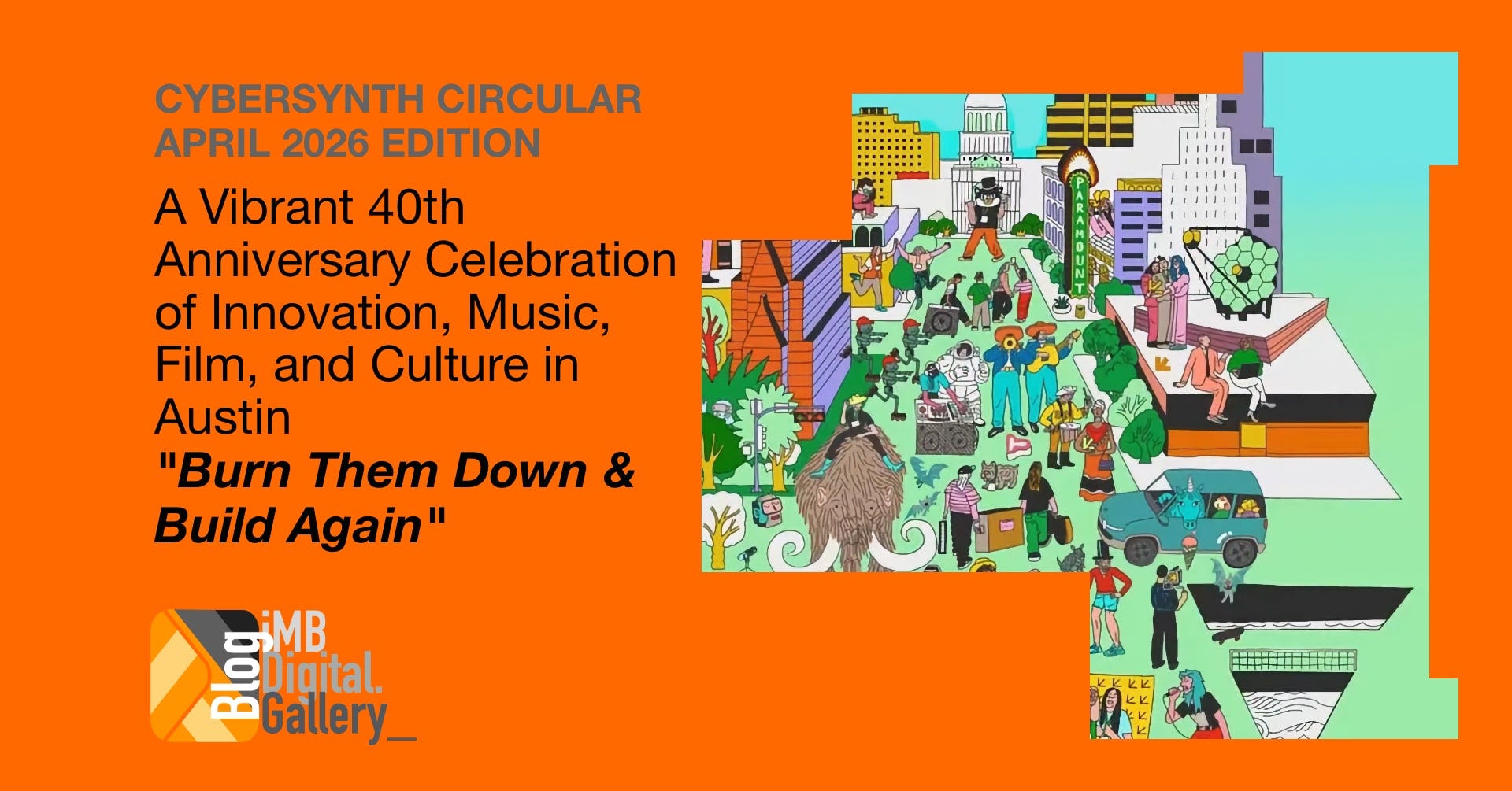
SXSW 2026: A Vibrant 40th Anniversary Celebration of Innovation, Music, Film, and Culture in Austin
For the third year in a row, we were back in Austin alongside colleagues from Brazil, Argentina, the U.S., Canada, and Europe. Of course, one is always tempted to say: “This time, all boundaries were shattered.” Undoubtedly, your first experience - some years ago - always sticks with you—that moment when you realized just how spectacular the festival in Texas is. But this time, there’s no other way to put it:
Yes, the boundaries were shattered. The festival was a manifesto for the dawn of a truly new era.
South by Southwest (SXSW) 2026 marked its historic 40th year with a dynamic, streamlined edition that brought together creatives, technologists, musicians, filmmakers, and thinkers from around the world. Held from March 12–18 in Austin, Texas, the festival condensed its signature blend of conferences, festivals, and showcases into seven action-packed days.
This year’s event adapted to the redevelopment of the Austin Convention Center by expanding its footprint across downtown venues, iconic music clubs, theaters, and pop-up spaces. The result was an even more immersive experience, with attendees exploring neighborhoods while diving into conversations on the future of technology, creativity, and society.
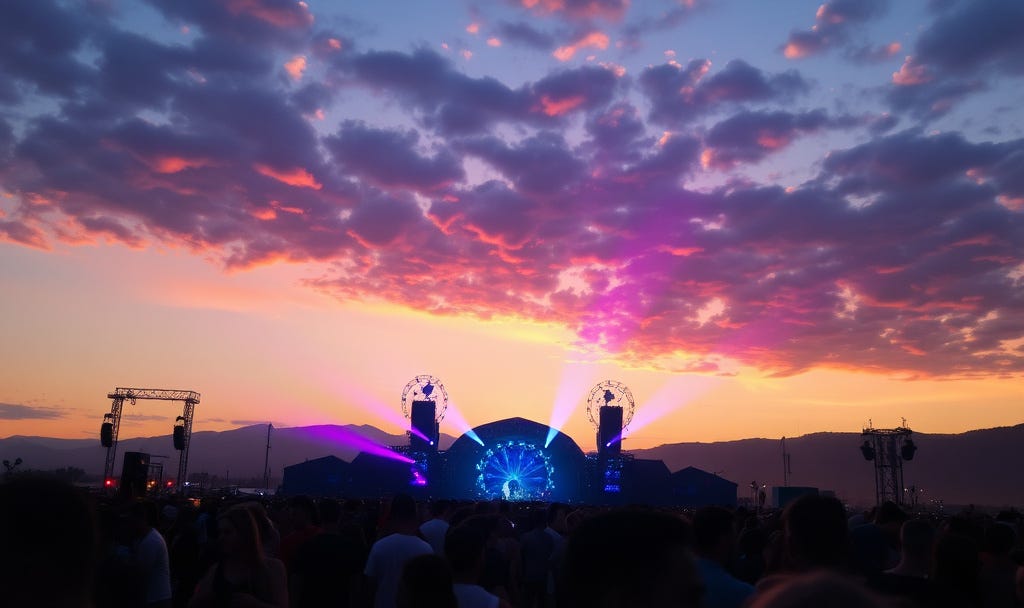
A Unified Schedule for Maximum Impact
For the first time, SXSW aligned its major components—Innovation Conference, Film & TV Festival, and Music Festival—within the same seven-day window. The week kicked off on Thursday, March 12, with Innovation tracks covering topics like Tech & AI, Creator Economy, Brand & Marketing, Cities & Climate, Startups, Sports & Gaming, Culture, and Workplace.
Music showcases expanded to seven consecutive nights, delivering breakthrough performances across nearly 60 venues, including Stubb’s, Mohawk, Antone’s, and ACL Live at the Moody Theater. Film & TV premieres rolled out the red carpet at local theaters, while comedy sets, exhibitions, and networking events rounded out the program.
SXSW EDU preceded the main event (March 9–12), focusing on education, AI in learning, and defending stories in schools.
Star-Powered Keynotes and Featured Sessions
The conference lineup featured an impressive roster of speakers who tackled timely themes, especially the intersection of AI, creativity, and human connection.
Highlights included:
Director Steven Spielberg discussing AI’s role in filmmaking (and why he avoids Instagram).
Conversations with high-profile names such as Jane Fonda, Serena Williams, Demi Moore, Keke Palmer, Gavin Newsom, Andy Cohen, Bob Odenkirk, Riz Ahmed, and Phil Schiller.
Music and culture figures like Eiza González, Taylour Paige, and Naomi Ackie.
Innovation voices exploring human-centric AI, the convergence of blockchain and intelligence, creator-brand partnerships (including Rhett & Link), and even decoding animal languages with Aza Raskin of the Earth Species Project.
Sessions also spotlighted futurist Amy Webb’s 2026 Emerging Tech Trend Report on “Creative Destruction”, alongside discussions on attention spans in the age of social media and AI, sustainability, and the evolving creator economy.
Music Festival: Genre-Bending Talent and Iconic Performances
The 40th Music Festival delivered on its promise of discovery, announcing hundreds of showcasing artists across waves. Early highlights included Fine, La Texana, Chalk, and Grrrl Gang, with later additions featuring Jack Johnson (performing with Hermanos Gutiérrez to celebrate his documentary SURFILMUSIC), Alanis Morissette headlining Spotify’s 20th-anniversary showcase at Stubb’s (joined by Ella Langley and a St. Vincent DJ set), Ty Dolla $ign, Vic Mensa, ZHU, Ingrid Andress, Benny the Butcher, and many more.
Showcase presenters ranged from returning favorites like Billboard, NPR Music, Rolling Stone, and the British Music Embassy to newcomers such as Willie Nelson’s Luck Reunion and Dream Con. The festival emphasized global talent and genre-blending acts, reinforcing Austin’s reputation as the “Live Music Capital of the World.”
Film & TV: Premieres, Stories, and Industry Conversations
The Film & TV Festival offered red-carpet premieres, compelling documentaries (including explorations of AI’s impact on attention), and panels featuring actors, directors, and producers. It served as a launchpad for emerging filmmakers while hosting high-profile talent for Q&As and insights into storytelling in an algorithmic age.
Key Themes and Takeaways from SXSW 2026
AI Everywhere, But With a Human Focus: Discussions ranged from AI in film and music recommendation tools to ethical concerns, job impacts, and “apocaloptimism” versus doom narratives. Many speakers emphasized keeping creativity and human connection at the center.
Creative Renaissance Amid Disruption: Panels explored how creators, brands, and artists navigate algorithmic platforms, participatory live experiences (including XR and immersive tech), and the convergence of physical and digital worlds.
Sustainability, Culture, and Connection: Tracks on cities & climate, culture, and the creator economy highlighted the role of community, longevity, and democratic values in a rapidly changing landscape.
Discovery and Networking: With an expanded downtown presence, attendees enjoyed more serendipitous encounters, pop-up activations, and opportunities to experience Austin’s vibrant food, barbecue, and local scene.
The festival also featured exhibitions, the SXSW Pitch startup competition, podcast stages (with voices like Kara Swisher and Marques Brownlee), and comedy programming.
Looking Ahead
As SXSW wrapped on March 18, 2026, it left attendees energized by the collision of ideas, talent, and technology. The event proved that even with logistical changes, its core magic—spotlighting what’s next while celebrating what makes us human—remains stronger than ever.
With keynotes and sessions now available for catch-up via livestream archives, and early buzz already building for 2027, SXSW continues to be the premier platform where culture, innovation, and entertainment intersect.
Whether you’re a technologist, musician, filmmaker, or simply curious about the future, SXSW 2026 delivered unforgettable moments of inspiration in the heart of Austin. Mark your calendars—the conversation continues in 2027.

CyberSynth MintedMinds Audio Blog - Token Costs Are Down 280x. So Why Are Your Cloud Bills Hitting Eight Figures?
The Paradox: We’ve all heard that AI is becoming cheaper and more accessible. In fact, token costs have plummeted a staggering 280-fold over the past two years. Yet, instead of saving money, enterprise IT departments are panicking as their monthly AI bills skyrocket into the tens of millions of dollars.
The Culprit: Welcome to the age of “inference economics”. While the price per individual AI token has dropped, overall AI usage—specifically inference, which is the act of using an AI model in real-world processes—has exploded much faster than costs have declined. The biggest driver of this runaway spending is agentic AI. Because autonomous AI agents rely on continuous, always-on inference to execute complex workflows, they can send your token consumption spiraling entirely out of control. Furthermore, a massive “hidden AI tax” is emerging as organizations struggle to pay for the sheer amount of energy and infrastructure required to power these massive computational demands.
Why You Must Listen: In the CyberSynth MintedMinds audio blog, “Why AI Costs Drop but Bills Skyrocket,” we unpack the critical tipping points where standard cloud-based AI services become cost-prohibitive for high-volume enterprise workloads. You will discover why leading organizations are abandoning default “cloud-first” approaches in favor of strategic hybrid architectures—blending cloud elasticity with on-premises consistency and edge computing immediacy—to regain control over their IT budgets. If your company is transitioning AI from experimental proof-of-concept projects to production-scale deployment, this audio is essential listening to prevent your infrastructure costs from collapsing your ROI.
AI as Creative Collaborator: How Artificial Intelligence Is Reshaping Storytelling in 2026
Artificial intelligence is evolving rapidly from a simple production tool into a powerful creative collaborator. This shift is fundamentally transforming who gets to tell stories, how narratives are crafted, and how audiences experience them. Far from replacing human artistry, AI is fostering a hybrid creative reality where technology eliminates mechanical friction, allowing creators to concentrate on vision, emotional depth, and authentic resonance.

The Triumph of the “Human Hand” and Curatorial Taste
Despite AI’s growing ability to generate technically polished and visually stunning content, industry leaders stress that it still lacks the intentional “messiness” and lived experience that foster genuine emotional connections with audiences. Legendary filmmaker Steven Spielberg, speaking at SXSW 2026, strongly championed the irreplaceable value of human creativity. He stated he has never used AI in his films and made it clear:
“I am not for AI if it replaces a creative individual.”

Spielberg’s stance resonated widely, with audiences applauding his emphasis on preserving human intuition in the director’s chair.
This perspective has led the industry toward a “human-preferred” framework. In this model, AI excels at execution—handling tedious or complex technical tasks—while final artistic intent, judgment, and oversight remain firmly human. As AI makes production faster and dramatically cheaper, a creator’s real value is shifting toward taste, curation, and thoughtful constraints. Unlimited generative possibilities can lead to creative paralysis; applying real-world rules, emotional logic, and deliberate boundaries is what transforms raw AI output into intentional, believable, and compelling stories.
The Democratization of High-End Production
One of the most exciting impacts of AI in 2026 is its role in radically lowering barriers to entry for storytelling. Independent creators no longer need massive budgets or traditional studio resources to achieve professional-quality results. AI tools now enable individuals to synthesize visuals, performances, music, and even full-length animated films at a fraction of historical costs.
Behind the scenes, AI is streamlining once labor-intensive processes:
Real-time de-aging of actors on set
Seamless foreign-language lip-sync dubbing
Automated color grading and visual effects
This democratization empowers nimble, independent teams to realize ambitious, blockbuster-level visions without relying on the traditional studio system. In 2026, we are witnessing a surge in micro-studios and solo or small-team filmmakers who compete creatively with major productions, opening doors for diverse voices that were previously excluded by financial and technical hurdles.
From Passive Consumption to Interactive Dialogue
Storytelling is moving beyond one-way delivery into dynamic, participatory experiences. Audiences are no longer passive observers—they are becoming active participants and co-creators.
Unscripted Gaming: In the video game world, AI-driven non-player characters (NPCs) are replacing rigid, pre-written dialogue trees. A standout example debuted at SXSW 2026: the VR experience Fabula Rasa: Dead Man Talking. Players engage in fully improvised, real-time conversations with AI characters that adapt dynamically to behaviors, emotions, and choices, creating unique storylines every time.
Generative Books: Authors are experimenting with “generative books” embedded with language models. Readers can pause at any point to ask questions, request summaries, explore deeper context, or even influence the direction of the narrative, turning traditional reading into an interactive dialogue.
Fan-Driven Co-Creation: Platforms like those from Fable Studio let fans use AI to write, voice, and animate original episodes or alternate storylines for beloved shows. This fan-driven approach blurs the line between consumer and creator, fostering vibrant shared universes and new forms of community storytelling.
Sensory and Immersive Storytelling
Creators are also combining AI with virtual reality (VR) and augmented reality (AR) to build hyper-immersive worlds that engage multiple senses and cultivate deep empathy. Journalists have employed AI-powered chatbots to convey intimate, composite stories of incarcerated women, while medical and educational applications use VR simulations to let users viscerally experience conditions like aphasia.
These tools allow storytellers to place audiences directly inside the narrative—making them active participants in living, responsive worlds rather than distant observers. The result is storytelling that feels more personal, empathetic, and transformative than ever before.
Looking Ahead: A Hybrid Creative Future
As we move through 2026, AI is not diminishing human creativity—it is amplifying it. By handling execution and technical complexity, AI frees creators to focus on what matters most: emotional truth, unique perspective, and the “human hand” that makes art resonate.
The future of storytelling belongs to those who master this hybrid approach—leveraging AI as a collaborator while anchoring every decision in human taste, judgment, and vision. Whether you’re an independent filmmaker, game developer, author, or journalist, the tools are now more accessible than ever. The only limit is the clarity of your creative intent.
What role do you see AI playing in your own storytelling journey? Share your thoughts in the comments below.
For more insights on the intersection of technology and creativity, explore our ongoing coverage of innovation in storytelling.
Agentic AI Delivers Measurable ROI: From Passive Tools to Autonomous Silicon Workforce in 2026

Agentic AI is marking a pivotal shift in enterprise technology. It evolves from passive, prompt-driven assistants into fully autonomous systems capable of setting goals, making decisions, and executing complex, end-to-end strategies with minimal human oversight. Rather than simply helping humans, these intelligent agents actively drive business value by completing multi-step workflows across digital environments.
Early data from 2026 shows strong momentum: a significant portion of enterprises deploying AI agents report measurable gains, with many organizations citing productivity improvements in the 20-66% range depending on implementation maturity. Common success metrics include productivity gains, time savings, and cost reductions, though forward-looking leaders are increasingly tying ROI to hard financial outcomes like revenue growth and profitability.
Why Agentic AI Outperforms Traditional Approaches
The highest returns emerge when companies move beyond layering agents onto existing human-centric processes. Instead, they redesign operations to be “agent-native,” creating seamless, end-to-end workflows that span departments and systems. This fundamental redesign has delivered double-digit improvements in cost efficiency and customer satisfaction for early adopters.
Key strategies driving transformative ROI include:
Agent-First Process Redesign By remapping composite processes — such as integrating billing, logistics, and customer service — organizations unlock efficiencies that traditional automation could never achieve. The result is faster cycle times, fewer errors, and more responsive operations.
Multi-Agent Orchestration True scale happens when specialized AI agents collaborate like a digital team. These multi-agent systems autonomously tackle intricate challenges, including global supply chain optimization, real-time financial decision-making, and complex compliance management. Orchestrated networks handle interconnected tasks far more effectively than any single agent or human team.
Decoupling Output from Headcount Agentic AI introduces the powerful concept of “unlimited labor.” Companies can dramatically increase output without proportional hiring. In HR, agents now automate up to 80% of pre-offer recruitment tasks. In software development, coding agents deliver productivity boosts of up to 10x, fundamentally changing how teams measure development ROI.
Specialized Analytics and FinOps Discipline Because autonomous agents run continuously, inference and token costs can accumulate quickly. Leading organizations implement strict FinOps frameworks and process intelligence platforms to monitor expenses in real time, track profit margins, and prioritize workflows with the highest automation returns. This ensures costs stay controlled while value compounds.
Treating Agents as a Professional “Silicon-Based Workforce”
The most successful leaders are shifting their mindset: they view agentic systems not as tools, but as a professionalized silicon-based workforce that complements human talent. This requires robust governance structures — careful onboarding, performance tracking, and accountability tied directly to financial metrics.
Many companies now require finance department sign-off on projected ROI before moving an agent from pilot to full production. This disciplined approach helps avoid common pitfalls and ensures deployments deliver sustainable value rather than hidden costs.
The Road to Measurable Impact
In 2026, agentic AI is moving enterprises from experimentation to tangible business impact. Organizations that redesign processes around agent capabilities, orchestrate multi-agent systems, and govern their digital workforce effectively are seeing the strongest returns — often combining efficiency gains with new opportunities for growth and innovation.
As agentic AI matures, the competitive advantage will belong to those who treat it as a strategic asset: autonomous, scalable, and deeply integrated into redesigned operations.
What’s your organization’s biggest opportunity (or challenge) with agentic AI? Are you redesigning workflows for agents or still layering them onto old processes? Share your thoughts in the comments.
This article draws on emerging 2026 enterprise trends and data around agentic AI adoption, ROI measurement and several discussions and conversations we had with entrepreneurs in Austin.
For deeper dives into AI strategy, innovation, and real-world implementations, explore our ongoing coverage of the future of work and technology.
Hybrid Cloud Architecture: The Smart Strategy Powering AI at Scale in 2026

As artificial intelligence moves from pilot projects to mission-critical production systems, organizations are discovering that a simple “cloud or on-premises” choice is no longer sufficient. Hybrid cloud architecture has emerged as the strategic framework of choice, intelligently combining public cloud, private on-premises infrastructure, and edge computing to optimize performance, control costs, and support enterprise-scale AI deployments.
Instead of forcing a binary decision, hybrid cloud allows companies to leverage the strengths of each environment through a practical three-tier approach:
Cloud for Elasticity
Public cloud platforms serve as the “easy button” for variable and unpredictable workloads. This tier excels at rapid prototyping, large-scale model training, and handling sudden spikes in demand. When AI experiments need massive compute power on short notice, the cloud delivers instant elasticity without requiring upfront capital investment.
On-Premises for Consistency
For steady, high-volume production workloads — especially continuous AI inference — organizations are turning to private, in-house infrastructure. Running inference on-premises provides predictable costs, greater control over data security, compliance, and performance consistency. It transforms what would be runaway operational expenses in the cloud into manageable capital investments.
Edge for Immediacy
When decisions must happen in milliseconds and cannot tolerate the latency of cloud round-trips, edge computing takes center stage. Local processing at the edge is essential for autonomous vehicles, smart manufacturing lines, real-time robotics, and other time-sensitive applications where immediate response is critical.
How Hybrid Cloud Saves Money in the Age of Inference Economics
One of the biggest challenges in 2026 is “inference economics.” While the cost of individual AI tokens has decreased dramatically, the sheer volume of always-on AI usage has exploded. Many enterprises now face monthly cloud bills reaching tens of millions of dollars just to keep inference running 24/7.
Hybrid cloud architecture directly addresses this problem by enabling organizations to shift predictable, heavy workloads off public cloud infrastructure and onto on-premises systems. This strategic migration turns ongoing operational expenses (OpEx) into more controlled capital expenses (CapEx).
Industry experts highlight a clear financial tipping point: when recurring cloud costs for a workload reach approximately 60% to 70% of the cost of purchasing equivalent on-premises hardware, it becomes significantly more economical to bring that workload in-house or to a managed hybrid service provider.
By dynamically matching every AI workload to the most cost-effective environment — cloud for bursts, on-premises for steady production, and edge for ultra-low latency — companies avoid overpaying for capacity they don’t need while maintaining the flexibility to scale when required.
The Bottom Line for AI-Driven Organizations
Hybrid cloud is no longer just a technical architecture — it is a core financial and operational strategy for sustainable AI growth. Organizations that adopt this three-tier model gain the ability to:
Control exploding inference costs
Maintain security and compliance where it matters most
Deliver real-time performance at the edge
Scale efficiently without cloud bill shock
As AI initiatives mature in 2026, the winners will be those who stop treating infrastructure as an all-or-nothing choice and instead build intelligent, workload-aware hybrid systems that balance cost, performance, and agility.
Is your organization still running most AI workloads entirely in the public cloud? Have you reached the tipping point where hybrid makes clear financial sense? Share your experience or questions in the comments below.
This article explores key infrastructure strategies discussed in enterprise AI circles throughout 2026 and during SXSW 2026 in Austin.
For more insights on AI infrastructure, cost optimization, and hybrid cloud best practices, explore our ongoing technology and innovation coverage.
Democratizing High-End Production: How AI Is Empowering Independent Creators in 2026
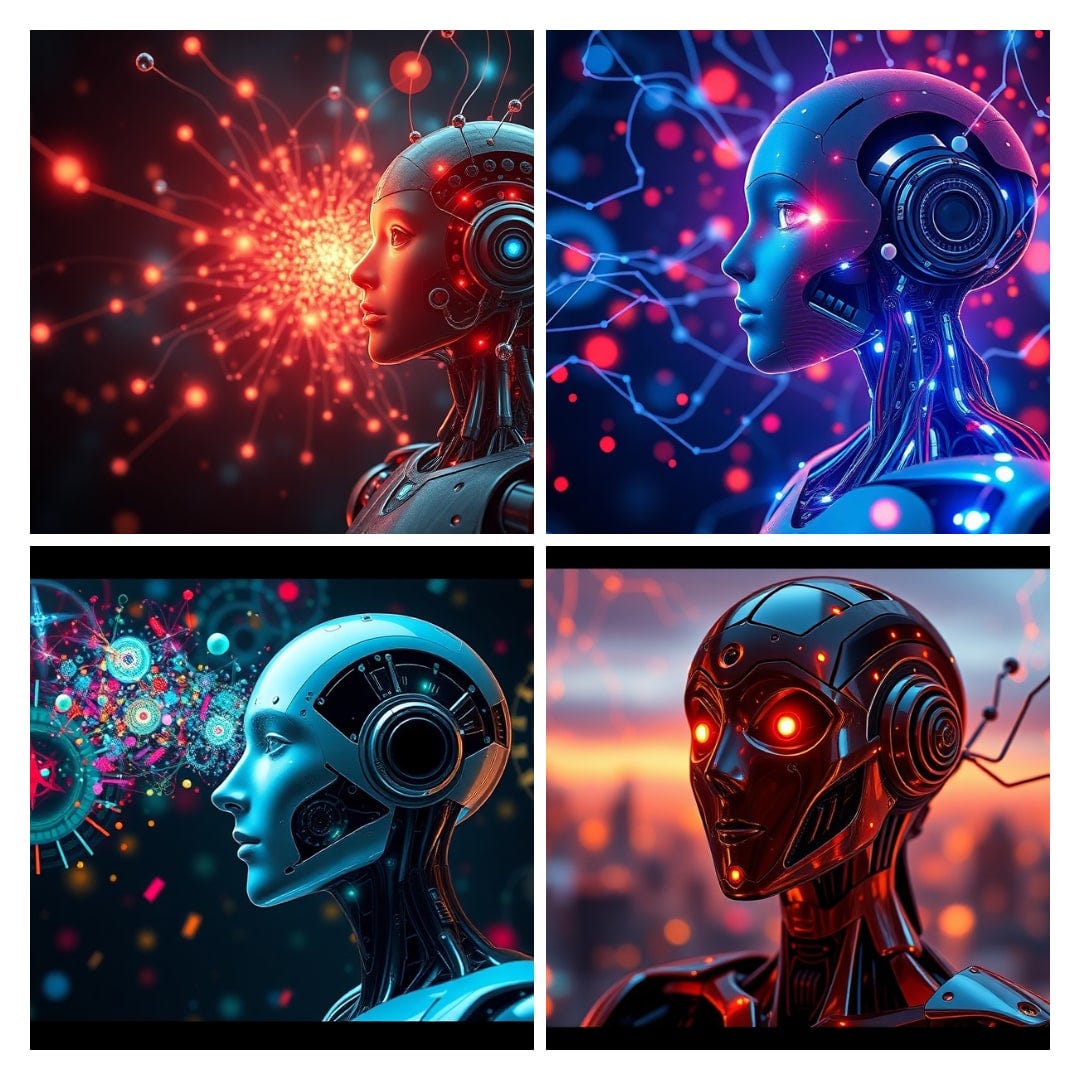
Artificial intelligence is fundamentally reshaping the economics and accessibility of high-quality storytelling and media production. What once required massive studio budgets, large teams, and deep industry connections is now within reach of nimble, independent creators. By dramatically lowering costs and logistical barriers, AI is democratizing production, enabling small teams — and even solo artists — to compete at a level previously reserved for major studios.
Breaking the Budget Barrier: Real-World Examples
The numbers speak for themselves. Independent creator Hooroo Jackson produced the fully AI-animated film DreadClub: Vampire’s Verdict using over 17,000 AI-generated images — for a total cost of just $405. Compare that to the traditional $1 million to $2 million budget typically required for a similar animated feature, and the scale of disruption becomes clear.
Studios like AiMation are proving the same point on a slightly larger scale, showing how small teams or even single individuals can now produce full-length features with dramatically reduced time and financial resources. This shift is opening doors for diverse voices and bold creative ideas that the traditional studio system often overlooked.
Virtual Production and Real-Time Rendering for Everyone
High-end virtual production techniques — once exclusive to blockbuster productions like The Mandalorian — are now accessible to indie filmmakers and small studios. Affordable real-time rendering tools, combined with neural rendering, allow creators to generate lifelike visuals, complex lighting, and cinematic environments instantly, without needing enormous computing farms or expensive hardware.
This democratization means independent projects can achieve movie-quality visuals faster and cheaper than ever before, blurring the line between big-studio polish and indie innovation.
Advanced Post-Production and Audio Tools at Your Fingertips
Small teams no longer need to outsource complex post-production to expensive facilities. Specialized AI software is handling tasks that once demanded highly skilled labor and professional studio setups:
Visual Effects: Open-source tools like Corridor Digital’s CorridorKey deliver neural green screen keying, solving long-standing challenges such as perfect edge extraction for hair, smoke, or transparent objects — making VFX accessible and affordable for independents.
Audio Enhancement: AI-powered noise reduction can salvage amateur recordings and turn them into studio-quality sound, even in less-than-ideal acoustic environments. Voice-to-voice tools like Audiio’s “Voices” transform basic voice recordings into high-fidelity narration while faithfully preserving the original emotion, tone, and pacing.
Music and Mixing: Platforms like RoEx’s Automix automate professional mixing and mastering, while services like The Rights simplify the notoriously complex process of clearing music sync licenses for smaller productions.
AI-Powered Game Creation
The revolution extends beyond film into interactive media. Platforms such as Bitmagic let users generate fully interactive 3D games using simple text prompts. By automating coding, asset creation, and design, these tools enable small teams without deep programming expertise to build and distribute sophisticated games on major platforms like Steam.
The “Human-Preferred” Hybrid Workflow
Despite the impressive capabilities of these AI tools, experts are clear: success doesn’t come from simply pressing a button. The most effective approach is a “human-preferred” hybrid workflow, where AI handles the mechanical heavy lifting — pre-visualization, rendering, sound design, and technical execution — while human creators retain full control in the “director’s chair.”
By applying thoughtful creative constraints and judgment, lean teams can use AI to iterate faster, experiment boldly, and bring ambitious visions to life without the traditional financial risks. Many believe this model could spark a new “golden era” of high-end creative work, driven by agile, independent studios that prioritize vision over budget size.
A New Era for Independent Storytelling
In 2026, AI is not replacing human creativity — it is unleashing it. By lowering financial and technical barriers, these tools are empowering a new generation of storytellers to produce professional-quality work with minimal resources. The playing field is leveling, and the future of film, animation, games, and interactive media looks more diverse, innovative, and exciting than ever.
Whether you’re a solo creator, small studio founder, or aspiring filmmaker, the message is clear: the tools are now available. The only limit is your creative vision.
What’s your biggest takeaway from the AI production revolution? Are you already experimenting with these tools in your own projects? Share your thoughts or experiences in the comments below.
This article highlights real-world examples and emerging tools showcased throughout 2026 in the worlds of film, animation, and interactive media exposed in Austin 2026.
For more on the intersection of AI and creative production, explore our ongoing coverage of storytelling innovation.
Multi-Agent Systems: The Next Evolution in AI Collaboration for Business in 2026

As businesses face increasingly complex and interconnected challenges, a new paradigm is emerging in artificial intelligence: multi-agent systems. Instead of relying on single, monolithic AI models, organizations are building networks of specialized agents that work together toward shared goals. These collaborative systems are proving far more effective at handling composite problems that span multiple departments, data sources, and workflows.
By passing context between agents, reasoning across functional boundaries, and dividing labor intelligently, multi-agent architectures can tackle tasks that would quickly overwhelm any individual AI system.
How Multi-Agent Systems Achieve Coordination
Multi-agent systems rely on several key mechanisms to enable seamless collaboration:
Agent Communication Protocols Standardized protocols are making true agent-to-agent interaction possible. The Agent-to-Agent Protocol (A2A) allows direct, cross-platform communication, while the Agent Communication Protocol (ACP) enables agents to collaborate through familiar RESTful APIs, regardless of their underlying technology or environment. These evolving standards allow agents to discover one another, exchange knowledge, and delegate tasks efficiently.
A “Microservices Approach” to AI Rather than building massive, general-purpose models, organizations are deploying many smaller, highly specialized agents positioned close to the relevant data and workflows. This reduces overall system complexity while enabling orchestration at scale. Individual specialist agents can then be combined to automate complete end-to-end business processes.
Massive-Scale Consensus Recent advancements show that AI models can now cooperate effectively in groups exceeding 1,000 agents — a scale of collaboration that surpasses most human teams. These large networks can rapidly reach consensus, incorporate diverse perspectives, and solve complex problems faster and more robustly than traditional approaches.
Real-World Applications Transforming Business
Multi-agent systems are already delivering impact across multiple domains:
Enterprise Workflows These systems excel at handling composite customer issues that cross departmental silos — seamlessly coordinating quoting, billing, entitlements, and logistics. They are also being used to autonomously manage global supply chains, optimize resource allocation, and reduce the need for constant human oversight.
Software Engineering Frameworks like MASAI deploy specialized sub-agents to tackle distinct parts of coding problems in parallel. This approach enables more precise problem-solving, efficient information retrieval, and significantly lower computational overhead compared to single-model solutions.
Physical Robotics & Swarms The multi-agent concept extends into the physical world through coordinated robot and drone swarms. Applications include optimizing agricultural irrigation, executing disaster response missions, and enhancing efficiency in smart manufacturing environments.
Why Multi-Agent Systems Matter Now
In 2026, business challenges are rarely simple or contained within one department. Multi-agent systems address this reality by mirroring the way organizations actually operate — through collaboration, specialization, and dynamic coordination.
By moving away from monolithic AI toward flexible networks of specialized agents, companies can automate more sophisticated workflows, respond faster to changing conditions, and achieve higher levels of autonomy with greater reliability.
As communication protocols mature and orchestration tools improve, multi-agent systems are poised to become a foundational technology for enterprise AI, driving the next wave of operational efficiency and innovation.
What’s your biggest challenge that feels too complex for a single AI solution? Could multi-agent orchestration be the answer for your organization? Share your thoughts or experiences in the comments below.
This article draws on emerging trends and practical implementations of multi-agent AI systems observed in 2026 and discussed with entrepreneurs in Austin, March 2016.
For more insights into advanced AI architectures, agentic systems, and their impact on business operations, explore our ongoing coverage of enterprise AI innovation.
The Silicon-Based Workforce: How Human Roles Are Evolving in the Age of Agentic AI

The rise of agentic AI and multi-agent systems is not about replacing humans — it’s about fundamentally transforming what humans do at work. In the emerging silicon-based workforce, routine and repetitive tasks are increasingly handled by autonomous AI agents, pushing human workers “up the ladder” toward higher-value activities that leverage uniquely human strengths: judgment, creativity, strategy, and oversight.
This shift creates a true hybrid human-digital collaborative model, where people and AI agents work side by side as complementary partners rather than competitors.
Key Ways Human Roles Are Evolving
As AI takes over mechanical execution, human responsibilities are concentrating in several critical areas:
Agent Supervision and Governance Humans are becoming “agent supervisors,” managing fleets of AI agents rather than performing the ground-level work themselves. This involves setting goals, validating outputs, building safety guardrails, monitoring performance, and stepping in for critical exceptions. Tasks involving significant risk, ethical considerations, or sensitive customer interactions will continue to require a “human in the loop” to ensure quality, accountability, and trust.
Growth and Innovation With routine administrative and operational work automated, employees gain bandwidth to focus on reimagining business processes, identifying new opportunities, and driving innovation. Freed from repetitive tasks, humans can explore how agent capabilities unlock entirely new products, services, and operational models.
The Emergence of Net-New Roles Entirely new job categories are appearing that center on human-machine collaboration. These include:
Human-AI collaboration designers (crafting seamless interactions between people and intelligent systems)
Edge AI engineers
Data quality specialists focused on synthetic data
Prompt engineers and orchestration specialists
Leadership positions are also transforming. Chief Information Officers (CIOs), for example, are evolving from traditional technology strategists into AI evangelists and orchestrators of hybrid workforces.
Democratization of Technical Work AI agents can now handle highly technical tasks such as writing code, generating reports, or building models. This allows non-programmers — including product managers, financial analysts, marketing professionals, and domain experts — to participate directly in technical workflows. These workers serve as a vital “translation layer,” converting business needs into clear instructions for AI agents without needing deep coding expertise.
The Future Workplace: Humans as Orchestrators
In the silicon-based workforce of 2026 and beyond, success belongs to organizations that view AI not as a replacement for people, but as a powerful amplifier of human potential. Humans will spend less time on execution and more time on shepherding, course-correcting, and orchestrating fleets of intelligent agents.
This hybrid model allows people to focus on what they do best: strategic thinking, creative problem-solving, ethical decision-making, and building meaningful relationships. Meanwhile, AI handles the scale, speed, and consistency that no human team could match alone.
The result is a more dynamic, innovative, and fulfilling workplace where technology elevates human work rather than diminishing it.
Preparing for the Hybrid Future
Leaders who proactively redesign roles, invest in upskilling for agent supervision and governance, and foster a culture of human-AI collaboration will be best positioned to thrive. The organizations that treat their silicon-based workforce as a strategic asset — with clear governance, training, and accountability — will unlock unprecedented levels of productivity and innovation.
How do you see your own role evolving as AI agents become more capable? Are you excited about moving “up the ladder” into strategy and innovation, or concerned about the pace of change? Share your perspective in the comments below.
This article explores the evolving nature of work in the context of agentic AI and multi-agent systems, building on trends observed in 2026 and intensively discussed with professionals during SXSW 2026 in Austin, Texas.
For more insights on the future of work, AI governance, and hybrid human-AI teams, explore our ongoing coverage of enterprise AI and workforce transformation.
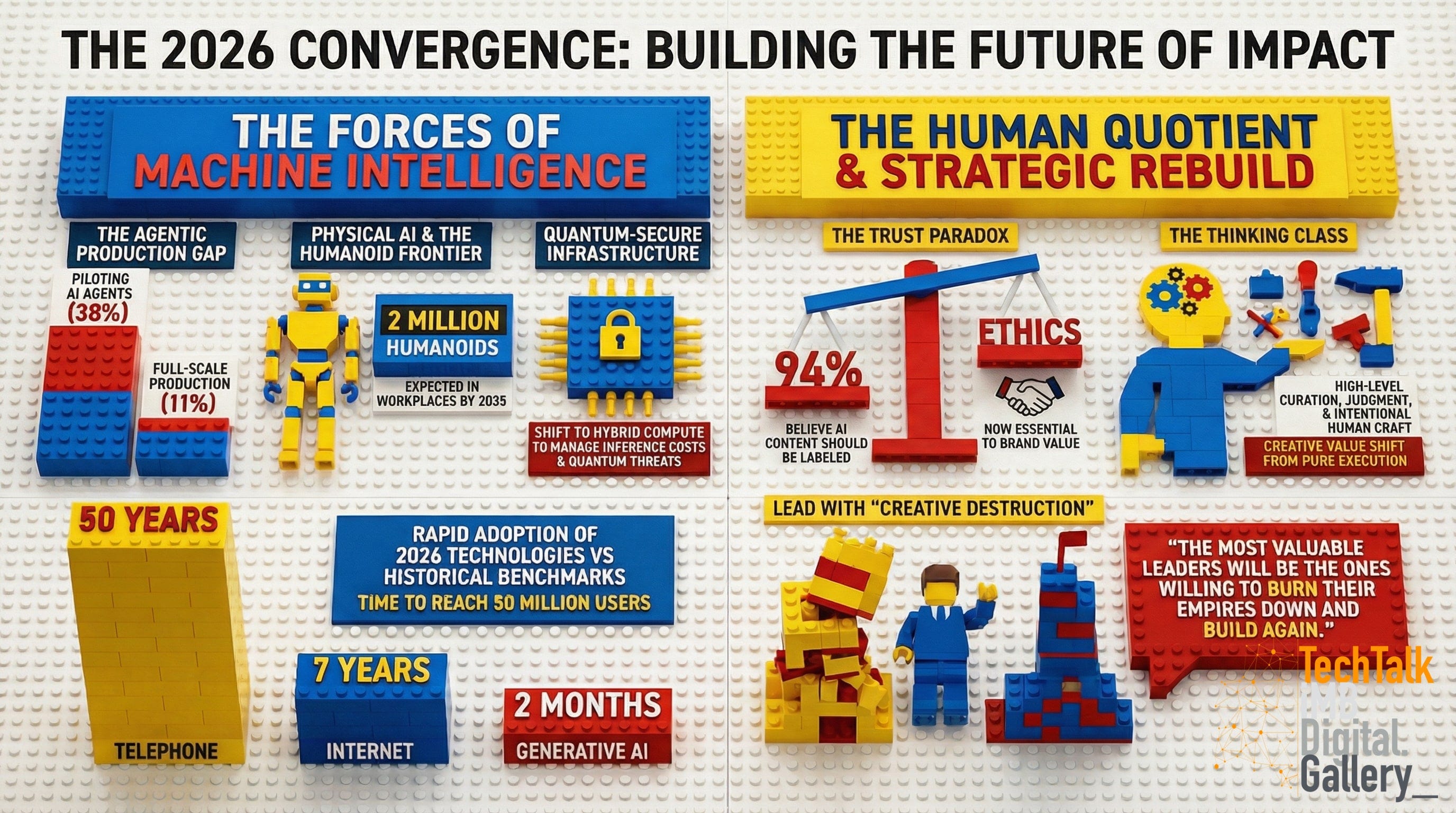
“Burn Them Down and Build Again”: Amy Webb’s Bold Call for Creative Destruction at SXSW 2026

At SXSW 2026, futurist Amy Webb delivered a powerful and provocative message to leaders: sometimes the smartest strategic move is to deliberately destroy what you’ve already built before the market does it for you.
In her keynote, Webb urged organizations to embrace creative destruction from within. Drawing on the classic economic concept, she argued that the greatest threat to any company today is not external disruption — it’s the instinctive refusal to dismantle successful but aging business models, products, or processes.
Why Leaders Naturally Resist Destruction
Webb pointed out that most executives have spent decades perfecting the art of “moat-building and margin-protecting.” Their instincts are honed to defend the empires they’ve created — the very systems that once drove success. However, in today’s environment, yesterday’s greatest strengths can quickly become tomorrow’s most dangerous liabilities.
We are now living in what Webb calls the “Convergence Era” — a time when technological, economic, geopolitical, and social forces are colliding and accelerating simultaneously. In this new reality, clinging to outdated models is one of the fastest ways to lose relevance.
The Discipline to Ask Hard Questions
To stay ahead, leaders must develop the courage to ask uncomfortable questions:
What are we willing to let die on purpose so that something more valuable can live?
Which of our current successes are actually holding us back from future growth?
Where are we blindly defending an empire that the future no longer needs?
Webb calls this deliberate act “burning it down and building again.” It requires discipline, foresight, and a willingness to cannibalize your own success before competitors or market shifts force your hand.
Leading by Example: Killing the Tech Trends Report
Webb didn’t just talk about creative destruction — she demonstrated it on stage.
After 18 successful years, she symbolically “killed” her highly regarded Tech Trends Report. What began as a groundbreaking annual PDF had, in her view, become a static crutch in a fast-moving world. Rather than continue relying on an outdated format of isolated trends, Webb replaced it with her new Convergence Outlook framework — a more dynamic, interconnected approach better suited to the realities of 2026 and beyond.
Her bold move sent a clear message: even the most successful tools and frameworks must evolve or be retired when they no longer serve the future.
The New Leadership Standard
According to Webb, the most valuable leaders in the Convergence Era will not be those who are best at building empires. They will be the ones who know exactly when and how to burn them down and start over.
This mindset shift — from protection to purposeful destruction — is becoming essential for long-term survival and relevance. Organizations that master internal creative destruction will be far better positioned to innovate, adapt, and thrive amid rapid convergence.
Final Thought
Amy Webb’s message at SXSW 2026 was both challenging and liberating: true leadership in the age of AI and convergence demands courage — the courage to let go of what once worked in order to create what must come next.
Are you ready to “burn something down” in your own organization? What successful product, process, or model might be holding you back from the future? Share your thoughts in the comments below.
This article is inspired by Amy Webb’s impactful keynote and discussions at SXSW 2026 on creative destruction and the Convergence Era we assisted and participated.
For more insights from SXSW 2026 and the future of strategy and innovation, explore our ongoing coverage of emerging tech trends and leadership in the Convergence Era.
SXSW 2026 - Blockchain and NFTs Take a Back Seat as AI Steals the Spotlight in Austin

Austin, Texas — March 12–18, 2026, marked the 40th anniversary of South by Southwest (SXSW), one of the world’s most influential gatherings at the intersection of technology, culture, music, and film. This year’s event unfolded in a more decentralized format due to renovations at the Austin Convention Center, spreading sessions, activations, and networking across the city. While the festival delivered its signature mix of innovation and creativity, one notable shift stood out: blockchain technology and NFTs, once headline-grabbers, played a significantly quieter role compared to previous years.
From Hype to Maturity: A Sharp Contrast with Past Editions
Remember the NFT frenzy of 2022? SXSW featured massive activations, including blockchain-sponsored events with stars like Dolly Parton, NFT galleries in parking lots, and co-created digital collectibles dominating conversations. Web3 enthusiasm carried into 2023 with broader decentralized tech discussions. Fast-forward to 2026, and the landscape had clearly evolved.
Crypto and blockchain no longer commanded center stage. Official panels heavily favored artificial intelligence (AI), with sessions exploring its practical impacts on work, creativity, commerce, culture, and even interspecies communication. AI was described not as an emerging novelty but as a pervasive force already reshaping reality — from redefining organizational models to sparking human-centric counter-movements focused on intentionality and purpose.
Blockchain discussions, when they appeared, were rarely standalone. Instead, they surfaced in the context of convergence with AI — examining how decentralized infrastructure could support AI agents, enable verifiable data provenance, facilitate tokenized models, power micropayments, and provide counterweights to centralized AI control. One featured session, “The Internet of Value Meets the Internet of Intelligence,” delved into what happens when AI agents can hold, send, and earn value, potentially reshaping business, consumption, and marketing.
Key Crypto Moments at SXSW 2026
Despite the reduced buzz, blockchain retained relevance in targeted ways:
Demystifying Crypto for the Masses: The National Cryptocurrency Association (NCA) made a strong return with educational initiatives aimed at everyday users and businesses. Their lineup included mentor sessions on blockchain, cryptocurrency, fintech, and nonprofits (held at the Hilton); a beginner-friendly “Crypto Curious Meet Up” at the JW Marriott; a “Crypto Confessions” booth for honest, jargon-free conversations; and a “Crypto Convergence” panel discussing the shift from speculation to real-world utility. These efforts focused on building confidence and practical participation without hype.
New Capital Markets Keynote: A highlighted featured session, “How Crypto Is Building New Capital Markets for Everyone, not just Wall Street,” featured speakers from the Solana Foundation and Foundation Capital. It explored how infrastructure originally built for financialized crypto has quietly unlocked pathways for creators and everyday users to access investment opportunities previously reserved for institutions. The discussion emphasized democratization, on-chain economies, and emerging consumer crypto landscapes.
Brand Activations with Utility Focus: Hardware wallet leader Ledger partnered with the San Antonio Spurs for an interactive “Ledger x Spurs Hoops” basketball activation, offering chances to win Bitcoin and exclusive swag. Additional Ledger experiences included a “Trading Post” for insights on digital security and a citywide mural hunt reinforcing themes of ownership and protection in an increasingly digital world.
NFT-specific hype was notably absent. No large-scale NFT galleries, co-created collectibles, or major Web3 takeovers dominated coverage, signaling that the technology had moved beyond speculative peaks into more integrated, utility-driven applications.
Why the Shift? Maturation and AI’s Dominance
Observers noted that cryptocurrencies had “lost their allure” at the festival, giving way to AI’s rapid rise. While AI attracted massive investment and high-profile speakers, crypto efforts centered on education, accessibility, and integration rather than standalone excitement. This mirrors a broader industry trend: blockchain maturing from hype cycles to foundational infrastructure.
Experts like those from the NCA highlighted parallels between early AI adoption and crypto’s journey — both moving from novelty toward practical, widespread use. In 2026, blockchain appeared most valuable as an enabler: supporting decentralized compute for AI, ensuring ownership and trust in AI-generated content, and powering new economic models for autonomous agents.
The festival’s overall theme leaned toward “All Together Now,” emphasizing human agency amid technological disruption. Blockchain’s role fit here as a tool for decentralization and empowerment, but it operated in AI’s substantial shadow.
Takeaways for Innovators, Creators, and Investors
Convergence is Key: The most forward-looking discussions weren’t about blockchain or AI in isolation but their intersection — the “Internet of Value” meeting the “Internet of Intelligence.”
Education Over Hype: Initiatives like the NCA’s underscore a push toward mainstream adoption through accessible conversations and real-world utility.
Opportunities in Capital Formation: Sessions pointed to evolving markets where creators and consumers can participate more directly, powered by on-chain infrastructure.
Practical Focus: Brands like Ledger emphasized security, ownership, and experiential activations, moving beyond pure speculation.
SXSW 2026 painted a picture of a tech ecosystem in transition. While AI dominated headlines and conversations, blockchain technology continued to evolve quietly as critical supporting infrastructure for a more decentralized, trustworthy, and participatory digital future.
As one recap aptly summarized, the era of crypto hype at SXSW may have peaked, but its underlying technologies are finding deeper, more sustainable relevance — especially when intertwined with the AI revolution reshaping our world.
What are your thoughts on the AI-blockchain convergence? Share in the comments or reply to this newsletter. For session recordings and archives, visit the official SXSW schedule.
Sources drawn from SXSW schedules, NCA announcements, and post-event recaps.
Thanks for reading CyberSynth Circular! This post is public so feel free to share it.

Available for iOS and Android
Start writing today. Use the button below to create a Substack of your own
We’re an agile team of independent consulting and project experts based in São Paulo, Brazil, specializing in cutting-edge technologies like blockchain 2.0, smart contracts, and generative AI. Our diverse team includes forward-thinking specialists in blockchain development, smart contract architecture, dApp design, and GenAI algorithms for OT. Committed to innovation, we thrive in São Paulo’s vibrant tech and entrepreneurial ecosystem. What sets us apart is our passion for applying emerging tech to solve complex challenges and drive meaningful change. Whether it’s decentralized solutions, smart contract optimization, or creative use of generative AI, we approach each project with creativity and expertise. Collaboration is central to our ethos—we blend diverse skills to deliver tailored solutions that exceed expectations. Seeking innovative solutions at the intersection of blockchain, smart contracts, and generative AI? Let’s connect and shape the future together, one project at a time. We are the tech arm of iMB.Solutions if it comes to digitization, generative AI and smart contract project missions.