The Creator Economy Signal | Mid-2026 Edition
The Agentic Shift: How Autonomous AI Swarms Rewrote the Creator Playbook. If early generative AI was like giving a creator a smarter paint brush, Agentic AI is like giving them an autonomous media network. In mid-2026, creators aren’t just using AI to write a caption or generate an image; they are directing swarms of AI agents that independently research trends, edit video, negotiate brand deals, translate content into multiple languages, and publish across platforms.
This shifts the creator’s role from manual laborer to Executive Producer/Director.

If late 2025 was defined by the panic over AI generating content, mid-2026 is defined by AI executing entire businesses.
We have officially moved past “prompting” tools like early ChatGPT or Midjourney. Today, the story is Agentic AI—autonomous digital workers capable of planning, executing, and optimizing complex workflows with minimal human oversight.
Single-person creator businesses are now running enterprise-level media operations using agent swarms. But as back-end execution becomes fully automated, the premium on front-end human authenticity has never been higher.
Here is how the agentic revolution is transforming the industry—and how top creators are adapting.
1. The Rise of the “One-Person Media Empire”
In the past, scaling a media brand meant hiring editors, social media managers, data analysts, and outreach coordinators. Agentic AI has rendered that legacy overhead obsolete for solo creators.
Autonomous Production Pipelines: Creators deploy agents that monitor niche trends, pull raw research, generate initial video edits, create multi-language dubs, tag metadata, and schedule posts across five platforms simultaneously.
“Vibe Coding” & Custom Tools: Independent creators are using agentic coding platforms to build their own custom dashboards, community management systems, and audience analytics without writing a single line of traditional code.
2. Machine-to-Machine Monetization
Brand deals used to take weeks of back-and-forth emails, contract reviews, and manual vetting. In 2026, brand deals are increasingly managed by AI agents on both sides.
Agentic Discovery & Vetting: Brands deploy buyer agents to scan millions of videos, analyze real-time engagement (filtering out synthetic “slop” views), and match with creators whose tone fits campaign goals.
Automated Contracts & Delivery: Agents negotiate micro-sponsorships, enforce brand safety compliance, and issue instant payouts based on real-time performance metrics.
3. Audience Engagement: The Synthetic DM Dilemma
With agents capable of handling DMs, community replies, and personalized member experiences, audience trust faces a new challenge.
The Bot Trap: Creators who deploy hyper-automated agentic replies in their public comments or private DMs are experiencing rapid audience pushback. Audiences can smell synthetic engagement immediately.
The High-Touch Solution: Winning creators use agents strictly for internal administration, reserving 100% of direct audience interaction (live streams, unedited voice notes, real-time replies) for their actual human selves.
The 2026 Reality: Taste & Trust Are the Last Competitive Advantages
Agentic AI has effectively commoditized execution. When autonomous systems can handle strategy, editing, distribution, and analytics in seconds, technical production capability is no longer a flex.
What remains? Taste, perspective, and genuine human accountability.
AI agents can manage your distribution, but they cannot live your life, hold a personal opinion, or build trust with a human community. The creators winning today are acting like CEOs of their agentic back-office, freeing up maximum energy to be unapologetically real in front of the camera.
Are you currently running any autonomous agents in your content pipeline, or are you keeping your stack manual? Hit reply and let’s discuss.
Solving Stablecoin Fragmentation: Why Regulated Networks Are Winning Global B2B Flows
The stablecoin liquidity problem is far more complex than ticker symbols suggest. While USDT and USDC offer global reach, underlying liquidity remains deeply fragmented: every jurisdiction trades, converts, taxes, and routes them through different banking rails. Checker eliminates this operational friction, creating an invisible, compliant settlement layer for financial institutions moving capital across borders.
At its core, Checker operates a self-reinforcing, two-sided market:
Demand Side: Cross-border B2B payment providers, neobanks, and regional FX banks seeking frictionless global settlement.
Supply Side: Regulated OTC desks and local FX brokers managing fiat-to-crypto last-mile conversions.
This architecture creates a compounding network flywheel: as demand-side institutions scale in one jurisdiction, they naturally pivot into supply-side liquidity providers for their home corridors, expanding the network’s organic reach.
Milestones & Institutional Traction
One year after launching in mid-2025, Checker has crossed $3 billion in total processed volume, capturing roughly 1% of all global B2B stablecoin flows. This volume establishes the network density required to handle high-friction, high-volume corridors that traditional correspondent banking neglects.
The Brazil-China Corridor: Moving Beyond Informal FX
The trade route between Brazil and China remains one of the world’s highest-volume yet most underserved commercial arteries. Despite massive bilateral foreign direct investment and trade, a significant portion of capital movement still relies on opaque, informal broker networks. Transitioning these flows onto formal, regulated VASP rails is no longer optional—it is an operational imperative.
The Q4 2026 Regulatory Land Grab
With the Central Bank of Brazil’s VASP framework scheduled to go fully live in Q4 2026, the window for market positioning is closing fast. FX brokers, wealth managers, fintechs, and payment companies are actively racing to lock in institutional-grade stablecoin infrastructure before compliant rails become mandatory.
Bringing the BRL Carry Trade On-Chain
Beyond payment flows, stablecoin architecture is fundamentally restructuring Latin American capital markets. Wall Street macro funds have historically leveraged Brazilian treasury yields for lucrative carry trades. By serving as the underlying conduit, stablecoins are migrating the BRL carry trade on-chain—democratizing access to high-yield sovereign assets for global crypto-native institutions and retail investors alike.
The trajectory entering the second half of 2026 is clear: stablecoin dominance won’t be won by issuing more tokens, but by linking regulated counterparties into a single, frictionless global network.
open-source, decentralized collaboration platform
The Workplace Signal | Late July 2026 Edition
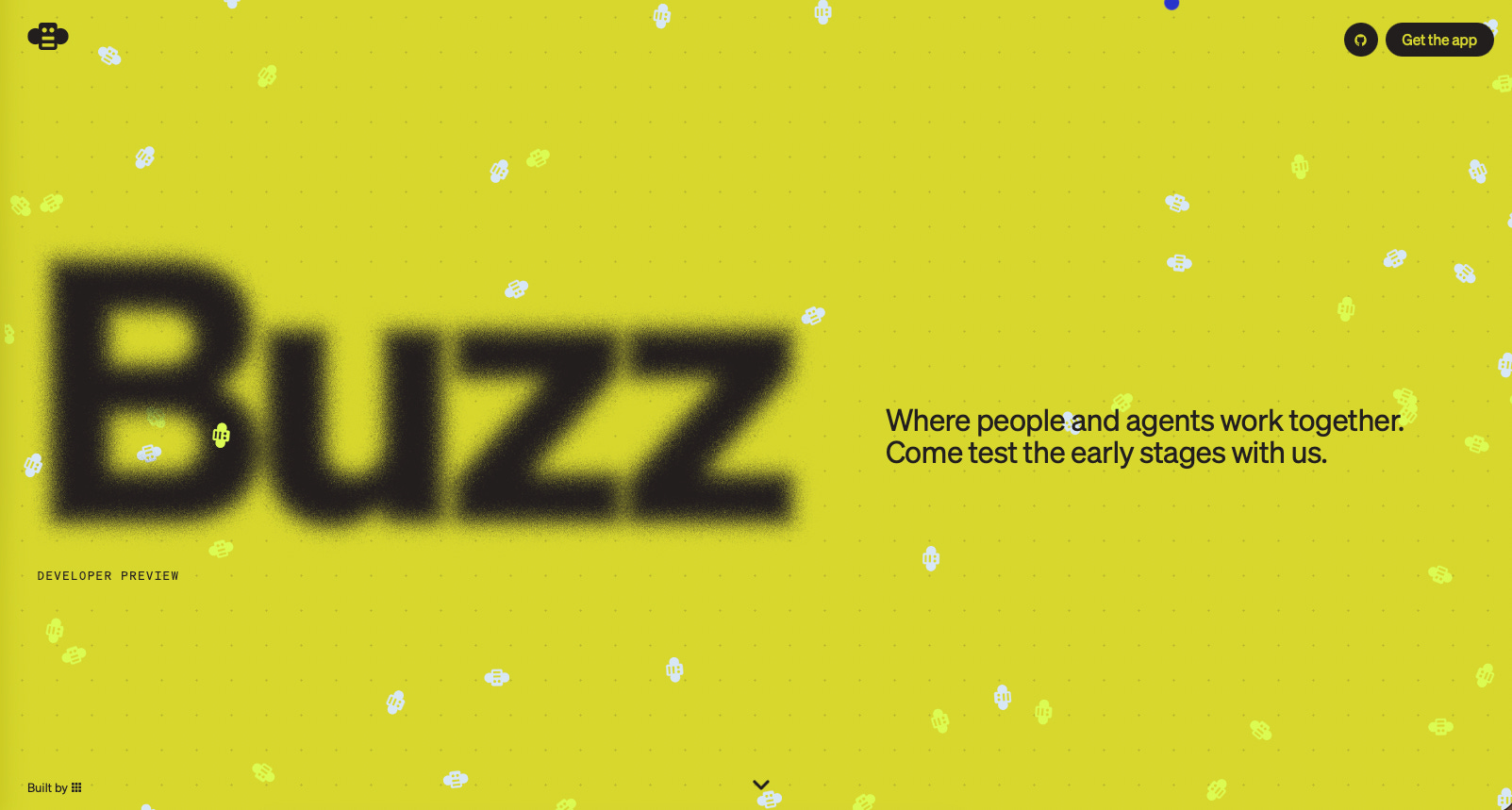
Jack Dorsey just launched Buzz: Why your next coworker might be a cryptographic AI agent
Here is our take: Jack Dorsey’s release of Buzz on July 21, 2026, marks a pivotal shift in how workplaces manage AI. Rather than treating AI as an add-on assistant sitting in a sidebar, Buzz attempts to replace the legacy stack of Slack, GitHub, and automation tools by treating AI agents as equal, cryptographically verified team members.
Part 1: Comprehensive Breakdown & Analysis
Our reporting highlights Jack Dorsey’s ambitious play to decentralize enterprise collaboration. The primary insights from the coverage include:
Direct Attack on Legacy Dependencies: Dorsey built Buzz within Block specifically to reduce reliance on proprietary platforms like Slack and GitHub. By unifying chat channels, voice huddles, Git project management, and task automation into one window, Buzz eliminates context switching across fragmented platforms.
Equal Footing for AI Agents: Traditional workplace apps treat AI as a slash-command bot or a sidebar wrapper. In Buzz, AI agents are full channel participants. They can initiate threads, submit patches, run code reviews, and execute workflows autonomously alongside human teammates.
Early-Stage Developer Reality: Released under version
0.4.21, TechCrunch notes that while the architecture is deeply thought through, the platform remains pre-1.0 and in its early preview phase. It is tailored for tech-forward teams and early adopters rather than instant enterprise-wide migration.
2. Analysis of buzz.xyz & Technical Architecture
The platform documentation and open-source codebase reveal a sophisticated foundation built for data sovereignty and multi-agent governance:
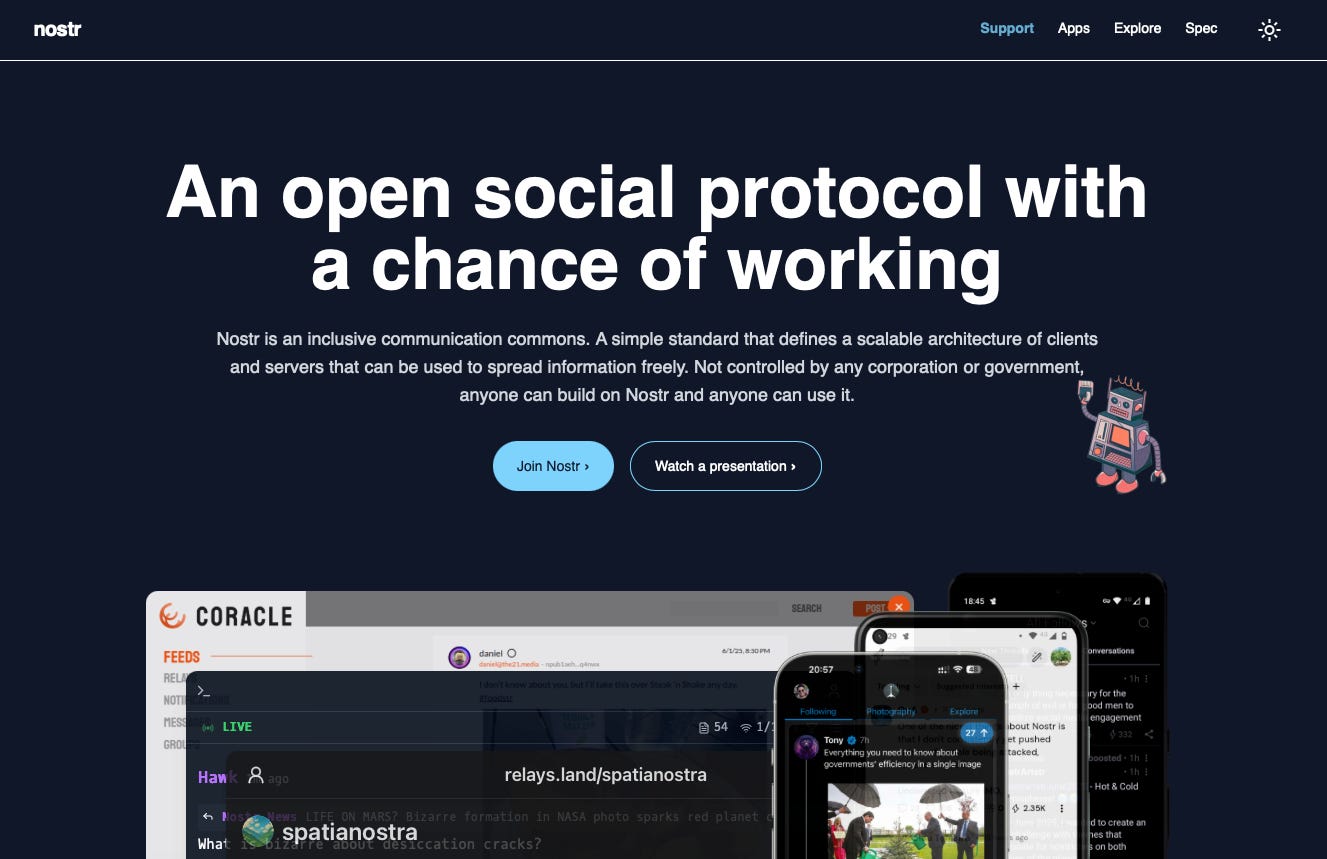
Built on Nostr: Buzz uses Nostr, an open, censorship-resistant messaging protocol. Instead of tied corporate user accounts, every participant (human or agent) is assigned a
secp256k1Schnorr cryptographic keypair. Every chat, code edit, reaction, and workflow trigger is a signed Nostr event, creating a tamper-evident audit log of who or what authorized an action.
Model-Agnostic & Agent-Agnostic: Operating via the open Agent Client Protocol (ACP), Buzz does not lock teams into a single LLM vendor. Teams can connect agents powered by Anthropic’s Claude Code, OpenAI’s Codex, or Block’s open-source Goose framework.
Self-Sovereign Infrastructure: Available under an Apache-2.0 license, teams can run their own Rust-based Nostr relay on private infrastructure, ensuring zero enterprise telemetry leaves their network, or use Block’s hosted option at
buzz.xyz.
For the last three years, corporate AI integration has looked like a series of sidebars: a ChatGPT plugin here, a Copilot window there, or a Slack bot that answers questions when tagged with an @ symbol.
On July 21, 2026, Twitter and Block co-founder Jack Dorsey officially declared that model dead.
Block unveiled Buzz (buzz.xyz), a free, open-source workplace platform built on the decentralized Nostr protocol. Buzz merges team chat, native Git code repositories, and automated workflows into a single workspace. But its defining feature is a fundamental redesign of team structure:
AI agents now sit inside your channels as first-class team members.
The Paradigm Shift: From Bots to Teammates
In legacy platforms like Slack or Microsoft Teams, AI is an add-on layer bolted on top of a ten-year-old architecture. In Buzz, agents share equal operational status with human employees.
Shared Context: Instead of pasting code snippets or research back and forth between isolated browser tabs, an agent in Buzz resides in the
engineeringormarketingchannel. It sees the full conversational history, monitors active Git branches, and responds in real time.Model Agnosticism: Buzz does not prescribe which AI model you use. Through the Agent Client Protocol (ACP), your team can deploy agents powered by Claude Code, OpenAI’s Codex, or open-source engines like Block’s Goose framework.
Legacy Model: Human Chat (Slack) ➔ Code Review (GitHub) ➔ AI Assistant (Browser Tab) Buzz Model: Human + AI Agent (Shared Channel) ➔ Signed Code Commit + Chat in One Stream
Solving the AI Governance Nightmare
The biggest obstacle to scaling AI agents in business has been auditability:
How do you prove which agent approved a push or triggered a transaction?
Buzz solves this at the protocol level using cryptographic identity:
Portable Keypairs: Every human worker and AI agent holds an independent cryptographic keypair.
Verifiable Audit Trails: Every message posted, pull request reviewed, or workflow executed is signed as a Nostr event.
Owner Attestation: Agents operate using cryptographic “owner tags” signed by human supervisors, enforcing clear boundaries on what an agent is authorized to do without relying on vendor trust.
The Open-Source Counter-Offensive
By releasing Buzz under an Apache-2.0 open-source license, Block is making a strategic bet against proprietary SaaS lock-in. Companies can self-host their own Rust-based relay on private servers, guaranteeing that sensitive internal data and AI agent interactions never touch third-party servers.
While Buzz is currently in early preview (v0.4.21), its architecture anticipates the near future of work: an environment where humans direct high-level strategy, while cryptographically accountable AI agents handle execution alongside them in real time.
If you want to see a full hands-on setup of Buzz, including how human creators wire up AI agents inside live channels and self-host on private servers, check out the YouTube video below. This video provides a practical walkthrough of creating custom agent channels, running audio huddles with AI teammates, and navigating Buzz’s cryptographic workflow.
Thanks for reading CyberSynth Circular! This post is public so feel free to share it.
WE
We’re an agile team of independent consulting and project experts based in São Paulo, Brazil, specializing in cutting-edge technologies like blockchain 2.0, smart contracts, and generative AI. Our diverse team includes forward-thinking specialists in blockchain development, smart contract architecture, dApp design, and GenAI algorithms for OT. Committed to innovation, we thrive in São Paulo’s vibrant tech and entrepreneurial ecosystem. What sets us apart is our passion for applying emerging tech to solve complex challenges and drive meaningful change. Whether it’s decentralized solutions, smart contract optimization, or creative use of generative AI, we approach each project with creativity and expertise. Collaboration is central to our ethos—we blend diverse skills to deliver tailored solutions that exceed expectations. Seeking innovative solutions at the intersection of blockchain, smart contracts, and generative AI? Let’s connect and shape the future together, one project at a time. We are the tech arm of iMB.Solutions if it comes to digitization, generative AI and smart contract project missions.