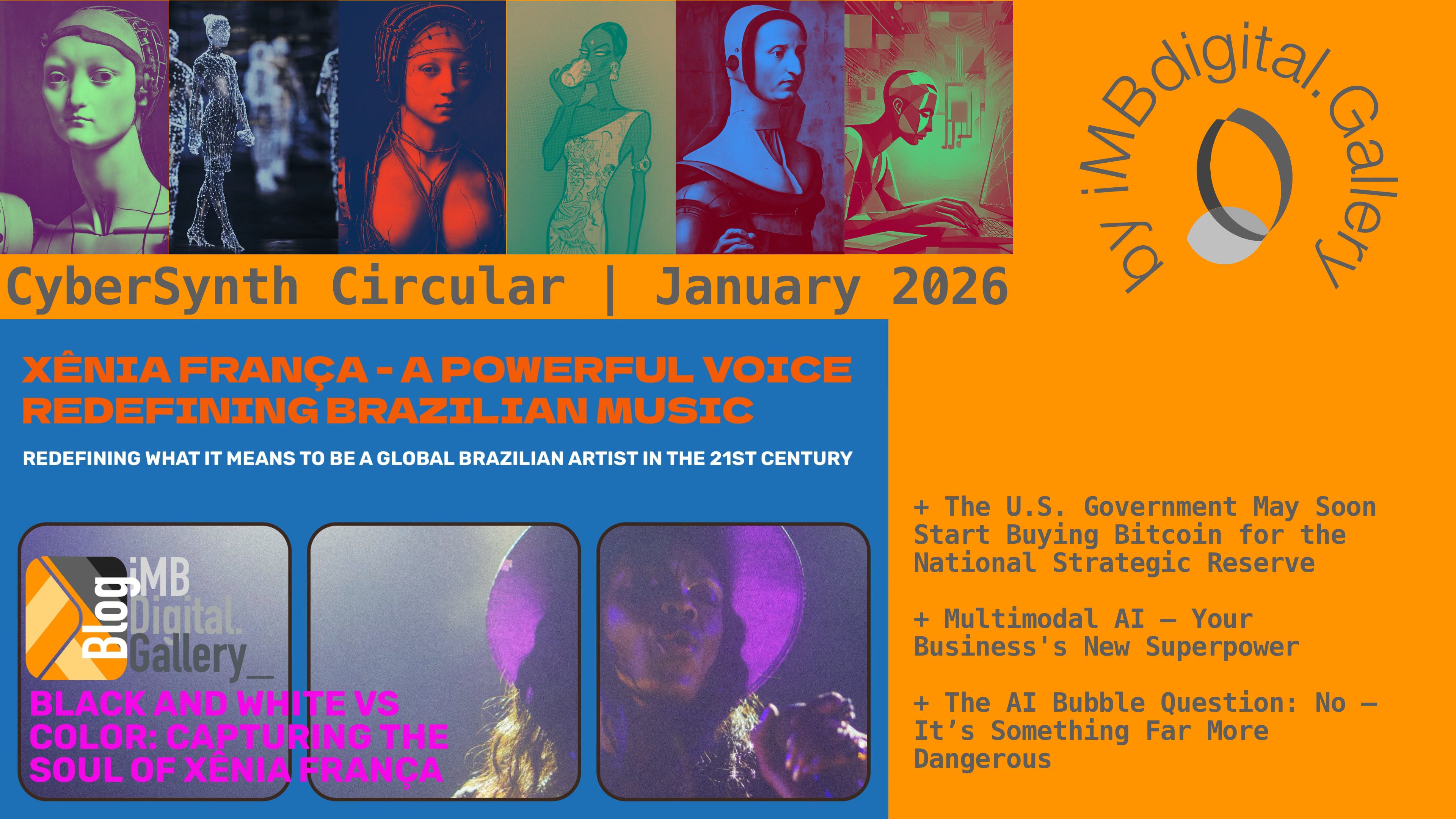
Xênia França - A Powerful Voice Redefining Brazilian Music
Discover the captivating journey of Xênia França, a rising star of Brazilian singer-songwriter whose soulful blend of Afro-Brazilian music, R&B, jazz, and pop is redefining contemporary Brazilian music. Born in Bahia in 1986, Xênia França rose from modeling in São Paulo to becoming a global icon, with her debut album Xenia earning Latin Grammy nominations in 2018 and her 2022 release Em Nome da Estrela winning Best Portuguese-Language Contemporary Pop Album in 2023. Explore her powerful advocacy for Black Brazilian women empowerment, her electrifying live performances at venues like SESC Pompéia, and recent 2025 releases like “Não Mais Poços de Petróleo” and the We4Sessions EP. As she gears up for a new album in 2026 focused on love and representation, Xênia França continues to inspire with her unapologetic celebration of Afro-Brazilian culture and resilience.
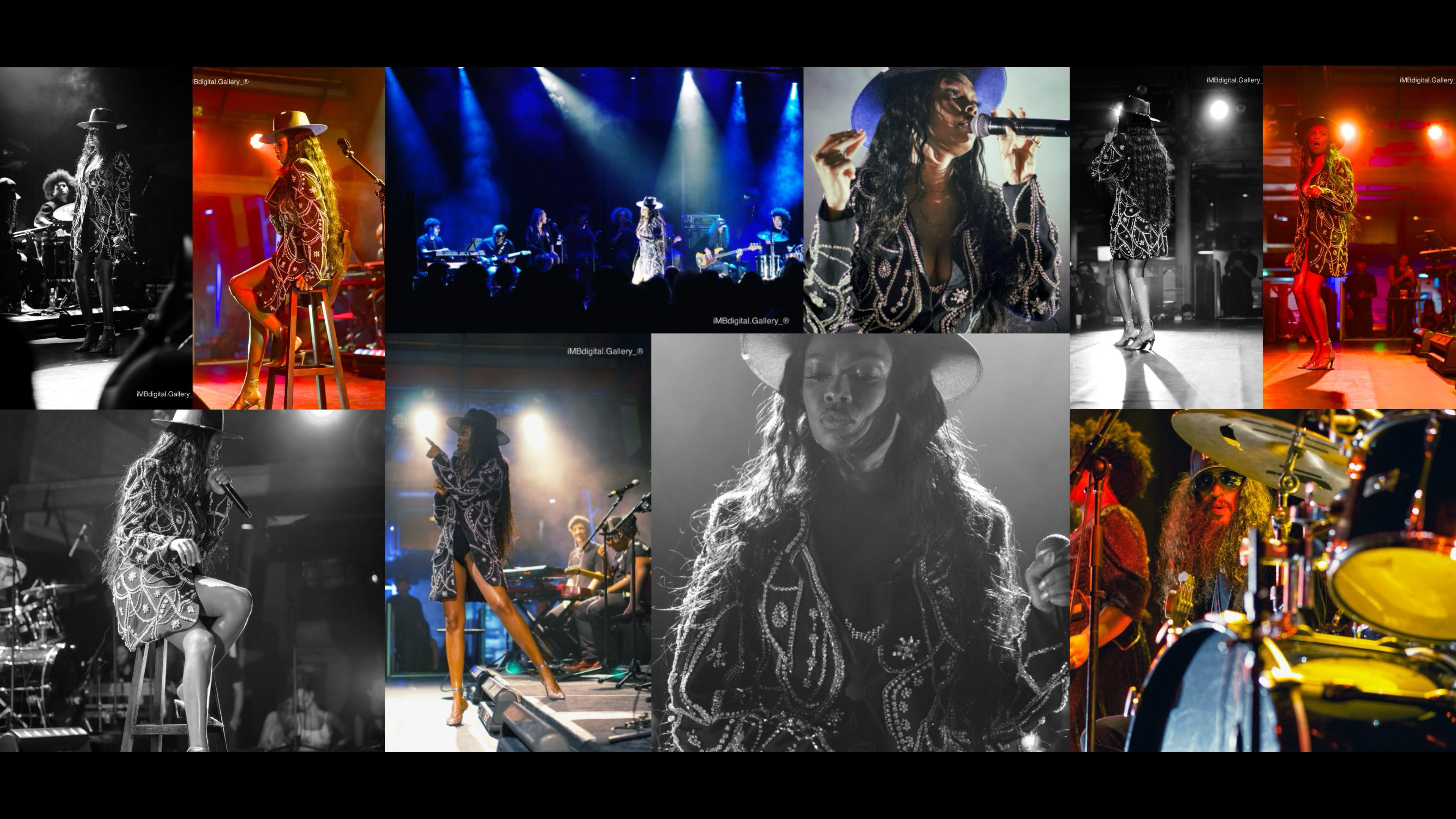
Delve into the art of concert photography through the lens of capturing Xênia França concerts. From the challenges of low-light shooting with high-ISO cameras and fast lenses to the eternal debate of black and white photography vs. color photography in live music, this blog uncovers how monochrome amplifies raw emotion and timeless drama, while color immerses viewers in vibrant stage spectacles.

Learn professional tips for live music photography, including high ISO management, white balance settings, and composition techniques like the Rule of Thirds. Whether you’re a photographer in the pit at São Paulo arenas or a fan reliving Xênia França live shows, discover how to choose between B&W concert photos for intimate, chiaroscuro storytelling or color concert images for authentic, mood-driven vibrancy. At iMBdigital.Gallery, we blend both styles to create resonant captures that honor artists like Xênia França and elevate your music photography skills.
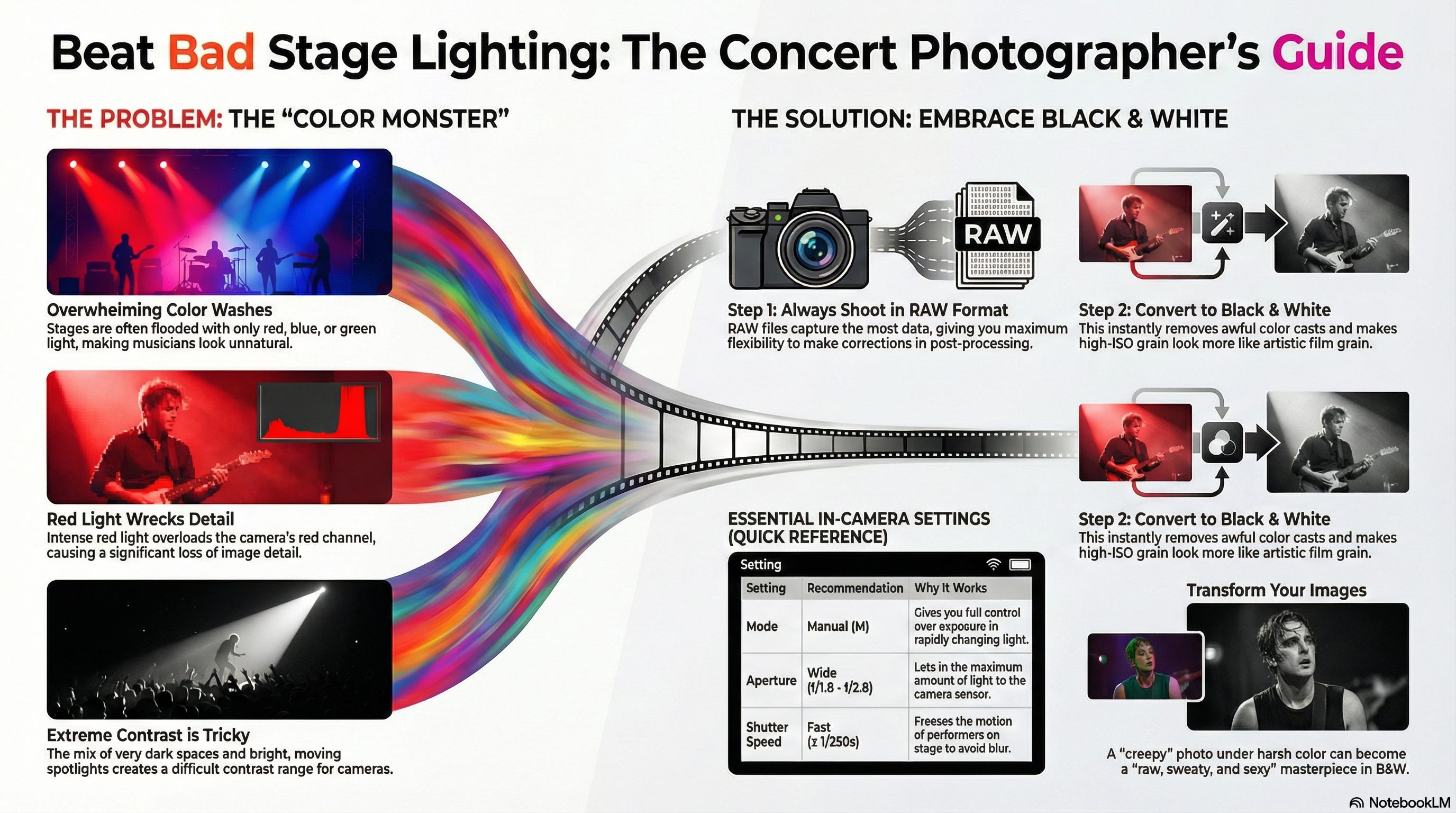
This comprehensive guide not only celebrates Xênia França’s discography and Latin Grammy wins but also equips aspiring photographers with insights into concert photography techniques for 2026, from post-processing decisions to blending monochrome and color for maximum impact.
If you’re searching for Brazilian music artists, Afro-Brazilian heritage in music, or expert advice on photographing live performances, this post is your ultimate resource. Join the conversation: What draws you to Xênia França—her soulful vocals, advocacy, or unforgettable stage presence? Share your thoughts and explore more at iMBdigital.Gallery for tips, recommendations, and collaborations.

Thanks for reading CyberSynth Circular by iMBdigital.Gallery! This post is public so feel free to share it.
Crypto & Policy Spotlight
Cathie Wood Drops a Bold Prediction: The U.S. Government May Soon Start Buying Bitcoin for the National Strategic Reserve
The intersection of high finance, politics, and Bitcoin just got even more electrifying.
In a recent appearance on the “Bitcoin Brainstorm” podcast, Cathie Wood, the visionary founder of ARK Invest, delivered one of her most forward-looking statements yet. She believes the Trump administration is poised to shift from merely holding seized Bitcoin to actively purchasing more – potentially transforming the newly established National Bitcoin Strategic Reserve into a true powerhouse asset akin to digital Fort Knox.

Wood pointed out the current reality: so far, the reserve consists exclusively of confiscated Bitcoin from government forfeiture actions. President Trump has already pledged not to sell these assets – a strong symbolic move. But she argues the original ambition was far bigger.

STRATEGIC BITCOIN RESERVE STRATEGY
“The original intent was to own 1 million bitcoins, so I actually think they will start buying.”
– Cathie Wood
Why Now? The Political & Strategic Calculus Is Compelling
Wood doesn’t mince words: crypto remains politically salient for President Trump, especially as midterm elections loom on the horizon. In her view, continuing to champion digital assets is one of the clearest paths to avoiding lame-duck status and securing a highly productive final stretch in office.
She highlights several reinforcing factors:
The crypto community’s decisive role in the election victory
Growing personal/family stakes in the industry’s success
The emergence of crypto as a legitimate path to the future for American economic dominance
And the numbers back up the political muscle: massive donations through PACs like Stand With Crypto, personal endorsements from industry titans (including Wood herself), and even companies like Coinbase, Tether, and Ripple funding the new White House ballroom – crypto is no longer fringe; it’s in the building.

From Holding → Actively Building: The Reserve’s Next Chapter?
The executive order creating the Bitcoin reserve (issued less than a week into the second term) currently treats seized BTC as a strategic national asset – much like gold reserves at Fort Knox.
Yet it also quietly instructed the Treasury and Commerce Departments to explore budget-neutral ways to acquire more. No purchases have happened… yet.
Wood is convinced the administration will move forward – and she expects additional pro-crypto wins, including a de minimis tax exemption that would eliminate capital gains taxes on small crypto transactions (a huge quality-of-life improvement for everyday users).
Meanwhile, several forward-thinking states (notably Florida and Texas) are racing to establish their own crypto stockpiles.
The race is on.

Bottom Line – Our Clear Take
Cathie Wood has built her reputation on seeing around corners others miss. When she says the U.S. government will likely transition from passive holder to active buyer of Bitcoin for the strategic reserve, serious investors should take notice.
This isn’t just about one asset class anymore. It’s about geopolitical strategy, economic positioning, and political legacy in the digital age.
The question is no longer if Bitcoin becomes a permanent fixture in national reserves — but how aggressively the United States will play to win the coming digital asset era.
Stay vigilant. Stay invested in the future. We’ll be watching every development closely.
To bold moves and even bolder outcomes,
The CyberSynth Circular Network
What do you think — will we see Treasury actually hitting the bid on Bitcoin in 2026? Drop your thoughts below! 🚀
Multimodal AI – Your Business’s New Superpower
You’re knee-deep in a high-stakes virtual meeting, juggling a messy chart on screen while bantering about that pesky sales dip from last quarter. Out of nowhere, your AI sidekick doesn’t just scribble down notes – it spots a hidden trend in the data you overlooked, drafts a voice memo for the team, and whips up a personalized audio recap for the latecomer dialing in.
Science fiction?

Hardly!
This is the dawn of multimodal AI, where chatbots evolve from mere text-tappers into all-seeing, all-hearing wizards that weave inputs together in real time. As the curator of CyberSynth Circular, I’m thrilled to dive into this with you today – because let’s face it, in a world where data flies at us from every angle, staying ahead means embracing tools that think like we do.
Ready to level up?
Let’s unpack how giants like OpenAI’s GPT-4o and Google’s Gemini 2.0 are reshaping the game, and why your business should jump on board pronto.
The Magic Behind Multimodality: Where Text, Images, and Audio Collide
Picture multimodal AI as the ultimate multitasker – not the frazzled kind who burns the toast while answering emails, but the seamless maestro that blends sights, sounds, and words like a pro chef mixing flavors. At its heart, this tech levels the playing field for data types. Old-school AI might tokenize text into bite-sized numerical nuggets for neural networks to digest, but toss in an image or audio snippet, and it used to choke. Not anymore.

Take OpenAI’s GPT-4o, for instance. It boasts a unified architecture where vision encoders (those clever convolutional layers that detect edges and patterns in photos) and audio processors (waveform transformers nailing pitch, tone, and even accents) all funnel into one shared language model.
The payoff?
Responses that hit in real time, feeling downright human. In its jaw-dropping demo, GPT-4o translated live spoken Italian into English subtitles while picking up on facial cues during a video call – all in under 300 milliseconds.
That’s quicker than your average eye blink!

For businesses, this spells magic in live scenarios: Think customer service chats where delays are deal-breakers, or Zoom integrations that auto-craft meeting summaries blending slide visuals with spoken insights. No more “Sorry, can you repeat that?” – just smooth, proactive collaboration.
Then there’s Google’s Gemini 2.0, charging into the “agentic era” with its Multimodal Live API. This beast streams audio, video, and text all at once, powering apps that adapt faster than you can say “pivot.”
Envision a retail setup: You snap a pic of a chaotic shelf, voice-describe the snag, and boom – it pulls inventory fixes from image analysis, text logs, and even background noise to gauge store busyness. Technically, it uses smart fusion layers to sync modalities without spiking costs, making it scalable for real-world ops.
I mean, who wouldn’t want an AI that saves you from budget-busting compute bills while delivering genius-level insights?
Here’s a fun, real-world twist to keep it relatable: I recently chatted with a marketing whiz in Canada who fed GPT-4o a mix of campaign images, customer voice feedback, and email chains. In a flash, it pinpointed how a certain color palette shone in audio descriptions for visually impaired folks, spiking accessibility by 25%.
Hilarious how an AI caught what humans missed – it’s like having a witty colleague who never needs coffee breaks.
My take?
This isn’t job-stealing sorcery; it’s the ultimate amplifier for human creativity in analytics. If you’re not experimenting yet, you’re missing out on that “aha!” edge.
Why Multimodal AI is a Must-Have for Your Business Arsenal
Alright, let’s get solution-oriented – because talking tech is great, but applying it is where the wins happen. In the wild world of business analytics, data doesn’t come neatly packaged; it’s a chaotic buffet of spreadsheets, dashboards, voice notes, and more. Multimodal AI turns those isolated silos into a harmonious symphony, boosting efficiency across the board. Gartner predicts that by 2027, 40% of generative AI solutions will go multimodal, revolutionizing fields like healthcare (merging scans with patient stories for holistic diagnoses) and finance (auditing via voice memos and charts for fraud detection).
But no rose without thorns: Ethics are key.
We must guard against biases sneaking in across inputs – imagine an AI misinterpreting cultural nuances in audio or visuals. Thankfully, with transparent training like Gemini’s latest tweaks, we’re steering toward fairer, more precise outcomes.
My opinion?
The real hurdle isn’t the tech; it’s inertia. Latency on edge devices is improving with distilled models, so why wait?

Proactively speaking, start small to soar big. Integrate voice queries into your BI tools for hands-free data dives, or pilot multimodal chatbots for customer support. Picture your team freed from tedious transcription, focusing instead on strategic genius. It’s innovative, it’s efficient, and frankly, it’s the future knocking – answer it!
What do you think? Have you dabbled in multimodal AI yet, or got a wild idea for its use? Drop a reply on X @ImbFrank – let’s keep the conversation going. Until next time, stay bold and innovative.—curated by Frank P. Neuhaus - founder of iMB.Solutions and iMBdigital.Gallery - The CyberSynth Network – Where Strategy Meets Innovation
This is the CyberSynth Circular, powering your business insights one breakthrough at a time.
Thanks for reading CyberSynth Circular by iMBdigital.Gallery! This post is public so feel free to share it.
The AI Bubble Question: No — It’s Something Far More Dangerous
Every week, the same nervous whisper lands in our inboxes:
“Is this whole AI thing just another bubble about to pop?”
Our answer is always calm, firm, and the same: No.
Calling it a “bubble” feels strangely comforting — bubbles burst dramatically, everyone dusts themselves off, and life goes back to normal. That is the thinking of structurally conservative contemporaries ... .

What we’re actually witnessing is far more serious — and infinitely more exhilarating.
We’ve already entered a trillion-dollar global infrastructure arms race, and the starting gun fired months (if not years) ago. Most people simply haven’t noticed the smoke yet.
Here’s the visual reality of what that arms race actually looks like today:

These aren’t sci-fi sets — they’re 100,000+ GPU superclusters consuming power equivalent to mid-sized cities, with rows upon rows of bleeding-edge hardware that will be semi-obsolete in just 12–18 months.
The New Oil Is Measured in Gigawatts and GPUs
Forget juicy software margins. The new frontier is heavy metal infrastructure:
Pure-play AI labs trapped in a brutal “re-up or die” cycle — raise another billion… or get lapped forever
Hyperscalers (Google, Microsoft, Amazon, Meta) quietly subsidizing the whole race with endless rivers of advertising and cloud profits
Specialized power plants being constructed in secrecy — some literally disguised as “ordinary” data centers
They’re not competing for the cutest chatbot trophy.
They’re fighting for control of the substrate — the foundational layer everything else will run on.
The Real Money Isn’t in Talking — It’s in Doing
Today’s large language models can still hallucinate poetry when you ask for tax advice and forget the beginning of the conversation after a few thousand tokens. Cute… until they become agents that actually execute.
That inflection point is already here.
In China, LLMs are being wired directly into robot fleets and smart-city operating systems — right now, at scale:
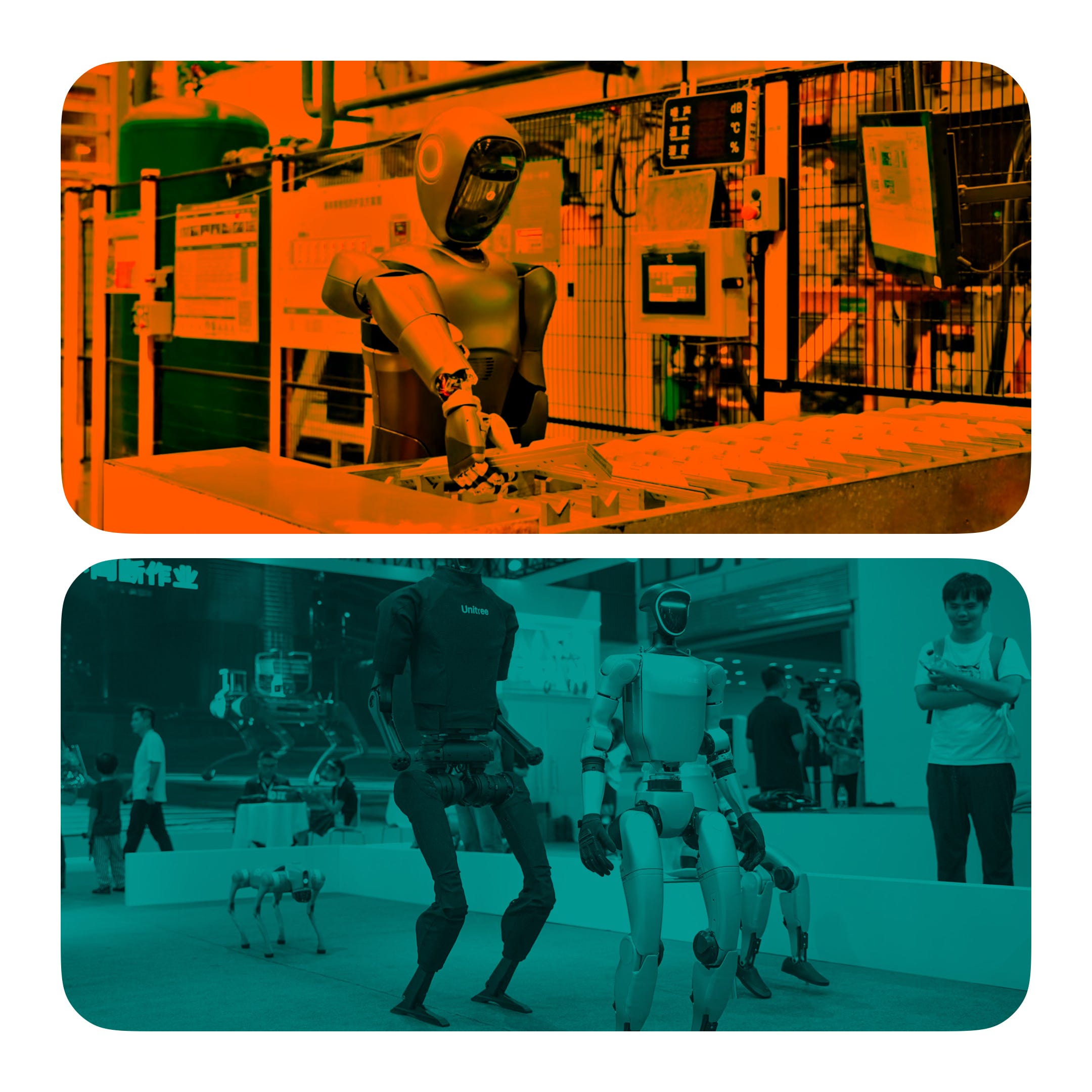
In the West, we’re steadily transforming tools like ChatGPT into the ultimate enterprise workflow engine and hyper-personalized shopping mall.
The economic explosion happens the moment models stop chatting and start doing the work.
Nation-States Have Entered the Arena
Governments now treat compute like they once treated oil fields — as strategic national assets:
U.S.: CHIPS Act + aggressive “Genesis Doctrine” export controls
EU: AI Act 2.0 + desperate sprint to build sovereign compute
China: full all-of-nation mobilization (because losing this race isn’t just an economic setback — it’s existential)
This is no longer a startup playground.
It is geopolitical power fused with critical infrastructure.

The United States and China are the only nations with AI ...
Classic Infrastructure Overshoot — Happening in Real Time
The numbers should give you chills:
~US$ 350 billion already committed in capex announcements (not hype — actual shovels in the ground)
Enterprise adoption of truly transformative AI still stubbornly below 20%
History rhymes with brutal clarity. Railways in the 1840s, fiber in the late 1990s, shale oil in the 2010s — every infrastructure megacycle follows the same arc:
Manic overbuilding
Demand lags behind (painfully)
Brutal consolidation & bankruptcies
A tiny handful of winners own the pipes forever
We are squarely in stage 2, accelerating hard toward stage 3.
Here’s what stage 1 looked like the last time the world went infrastructure-mad:

The Prize Isn’t a Better Chatbot
The victors — companies and countries alike — won’t be the ones with the flashiest demo reel.
They will be the ones who control the nervous system of the entire 21st-century economy: the real-time reasoning layer that routes capital, logistics, scientific research, military decisions, and ultimately power itself.
This doesn’t go to zero.
It concentrates — dramatically, ruthlessly — into fewer, stronger, frequently state-backed hands than most of us are emotionally ready to accept.
So no, dear reader — this is not a bubble.
It is the greatest wealth- and power-creation event of our lifetimes… and the consolidation phase is about to turn gloriously (and brutally) Darwinian.
Buckle up. Place your bets with eyes wide open. And whatever you do — don’t blink.
Onward — faster, smarter, and unapologetically ambitious,
The CyberSynth Circular Team
The Chief AI Realists & Eternal Optimists
P.S. If you’re still building “just another wrapper” in 2026… now would be an excellent moment to ask yourself:
Whose infrastructure are you actually feeding — and will they let you keep any of the profits once the agents really go live?
Let’s talk about it — drop your sharpest take in the replies. We read every one. 🚀
Link in bio / thread 👇
Share CyberSynth Circular by iMBdigital.Gallery

Available for iOS and Android
Start writing today. Use the button below to create a Substack of your own
Have you seen our new website yet?
WE
We’re an agile team of independent consulting and project experts based in São Paulo, Brazil, specializing in cutting-edge technologies like blockchain 2.0, smart contracts, and generative AI. Our diverse team includes forward-thinking specialists in blockchain development, smart contract architecture, dApp design, and GenAI algorithms for OT. Committed to innovation, we thrive in São Paulo’s vibrant tech and entrepreneurial ecosystem. What sets us apart is our passion for applying emerging tech to solve complex challenges and drive meaningful change. Whether it’s decentralized solutions, smart contract optimization, or creative use of generative AI, we approach each project with creativity and expertise. Collaboration is central to our ethos—we blend diverse skills to deliver tailored solutions that exceed expectations. Seeking innovative solutions at the intersection of blockchain, smart contracts, and generative AI? Let’s connect and shape the future together, one project at a time. We are the tech arm of iMB.Solutions if it comes to digitization, generative AI and smart contract project missions.