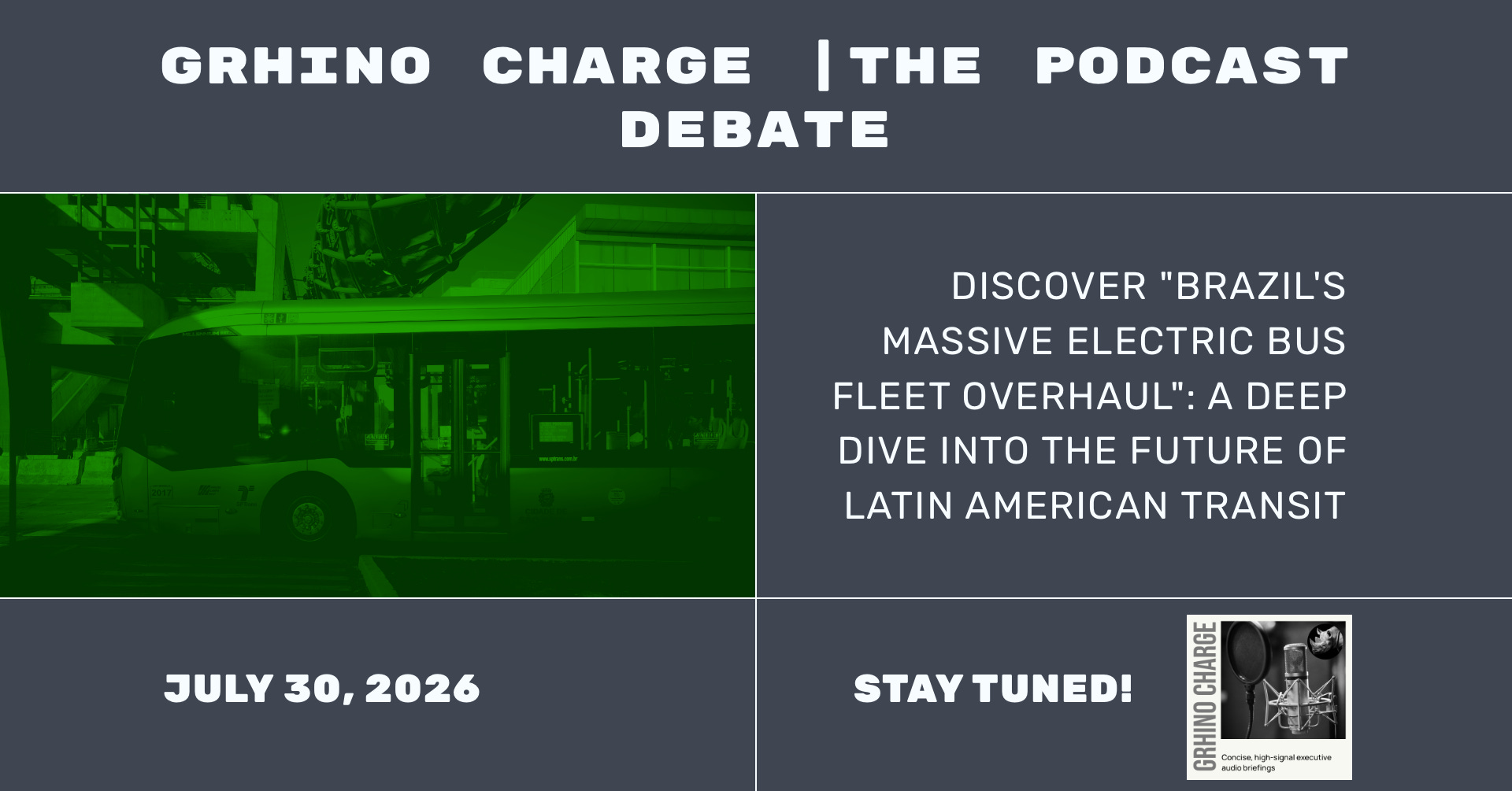
🎧 Ready to explore the future of sustainable transit? Our latest audio blog, “Brazil’s Massive Electric Bus Fleet Overhaul,” dives deep into how Brazil is revolutionizing its public transport network from the ground up! 🇧🇷🚌⚡
Did you know that over 14,000 diesel buses across Brazil’s largest metropolitan regions are primed to be replaced by zero-emission electric buses by 2030? This isn’t just a distant dream—it is happening right now, backed by a new EUR 80 million credit enhancement fund and massive local manufacturing investments.
Tune in to our comprehensive audio overview to hear how cities like São Paulo are pioneering innovative “partial subvention” financing to make this multi-billion-dollar transition a reality. Whether you are an urban planner, an e-mobility enthusiast, or a green tech investor, this is the deep dive you need.
👉 Listen to the full podcast now!
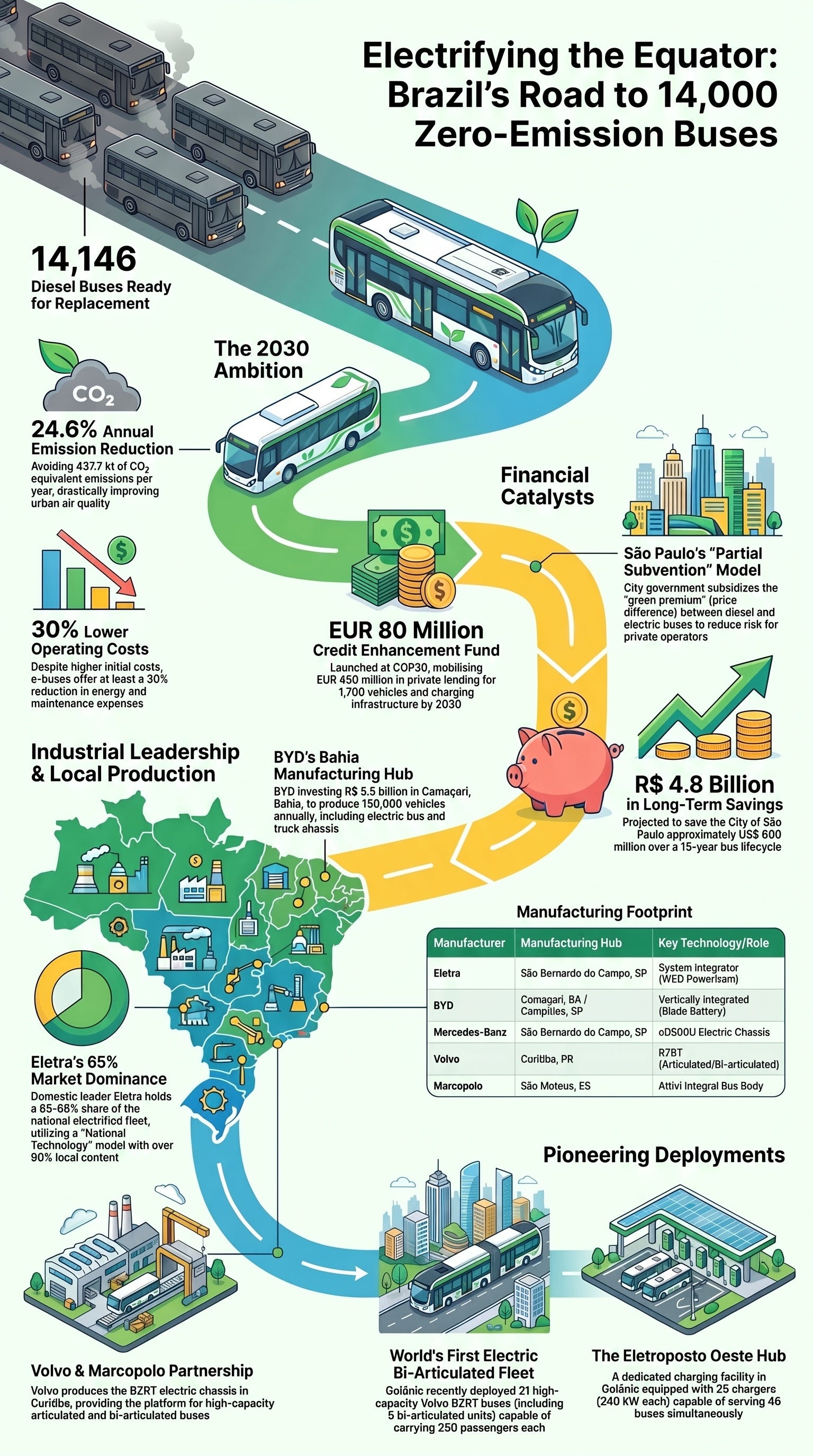
🚌 Visualizing the Future: Brazil’s Zero-Emission Bus Roadmap ⚡
We are excited to share the release of our latest visual asset and its accompanying Executive Summary: Brazil’s Zero-Emission Bus Roadmap. This infographic provides a comprehensive, scannable breakdown of the policies, investments, and manufacturing strategies currently driving the largest urban transit electrification initiative in Latin America.
Designed for stakeholders across mobility, finance, and public policy, the summary distills the complex web of Brazil’s e-mobility transition into a few core, highly impactful themes:
The 14,000-Vehicle Ambition: The focal point of the roadmap is the staggering scale of Brazil’s fleet replacement, targeting the transition of over 14,000 aging, highly polluting diesel buses to zero-emission alternatives across major metropolitan regions by 2030.
Unlocking Capital with Innovative Finance: To overcome the massive hurdle of high upfront capital costs, the summary highlights two pivotal financial catalysts. First is the new EUR 80 million Brazil E-Bus Credit Enhancement Fund, designed to mobilize private lending and deploy over 1,700 e-buses. Second is São Paulo’s groundbreaking “partial subvention” model, where the municipal government directly subsidizes the premium cost of an electric bus for private operators, an approach projected to save the city R$ 4.8 billion over the 15-year lifecycle of the buses.
The Supremacy of Domestic Manufacturing: The infographic visually underscores the dominance of local industry, specifically the Brazilian system integrator Eletra, which currently holds a 65% national market share. Driven by strict local-content requirements, Eletra is utilizing a R$ 40 million investment to boost its São Bernardo do Campo production capacity to 3,000 vehicles per year using 100% Brazilian-made electric chassis.
Global Giants Localizing Production: Finally, the summary maps out the localization strategies of international heavyweights. This includes BYD’s massive R$ 5.5 billion manufacturing complex in Bahia, and Volvo’s production of the BZRT electric bi-articulated chassis in Curitiba, which is supplying record-breaking 28-meter e-buses capable of carrying 250 passengers.
The Bottom Line: As the executive summary makes clear, Brazil’s e-bus transition is not merely an environmental goal—it is a deeply integrated industrial strategy. By combining agile municipal subventions with strict local manufacturing ecosystems, Brazil is successfully building an electrified transit hegemony.
iMB.Solutions - Business Development, Reorganization & Transformation Experts
From Brazil to Mexico – Your Safe Landing Zone for Interim Excellence and Implementation Oriented Consulting.
Shape Latin America’s future – boldly and securely.