Prime Story

Mercedes-Benz Trucks and Buses maintain a strong dual presence in South America through major operations in Brazil and Argentina.

In Brazil, the São Bernardo do Campo plant is the largest Mercedes-Benz commercial vehicle factory outside Germany. Established in 1956, the facility produces light-, medium-, and heavy-duty trucks including the Accelo, Atego, Axor, Actros, and Arocs model ranges, as well as urban and intercity bus chassis. The plant also manufactures engines, transmissions, axles, and cabins. It serves as a global competence center for bus chassis development and has been modernized with Industry 4.0 technologies since 2018. Daily production reaches approximately 200+ vehicles (trucks and bus chassis combined).
The plant is the regional hub for electromobility. The battery-electric eO500U urban bus chassis, fully developed in Brazil, has been in series production since late 2022. It offers a range of up to 270 km. In 2025, 222 units were registered in Brazil, with cumulative sales exceeding 500 units. Expansion of dedicated electric production areas is underway to support the upcoming articulated eO500UA model.
In Argentina, Mercedes-Benz Camiones y Buses operates independently from the passenger car and van business. In May 2026, the company inaugurated the new Centro Industrial Zárate with an investment of USD 110 million. The plant produces Accelo and Atego trucks as well as OH and OF bus chassis under a CKD process, with major components supplied from Brazil. Annual capacity is planned to stands at up to 10,000 units without provision yet. Today, approximately 17 vehicles are produced per day.
Mercedes-Benz Argentina reports that this capacity is entirely sufficient to meet the demands of the domestic market. This is all the more surprising given that, according to the Argentine government, substantial investment volumes are reportedly flowing into the mining and agricultural industrial sectors, and the government’s RIGI investment program is intended to attract massive amounts of foreign capital. On the other hand, this low production figure aligns with the sales figures of other commercial vehicle manufacturers in Argentina. Sales remain at a surprisingly low level, and forecasts for the remainder of the current 2026 fiscal year—as well as plans for 2027—look anything but positive.
Electric buses are not yet produced locally; eO500U chassis are imported from Brazil.
The two countries form an integrated production network: Brazil acts as the technology, volume, and electrification center, while Argentina provides market proximity and export capabilities within the Southern Cone. This structure positions Mercedes-Benz as a leading commercial vehicle manufacturer in Latin America, with strong market shares especially in the bus segment.

The LatAm Story
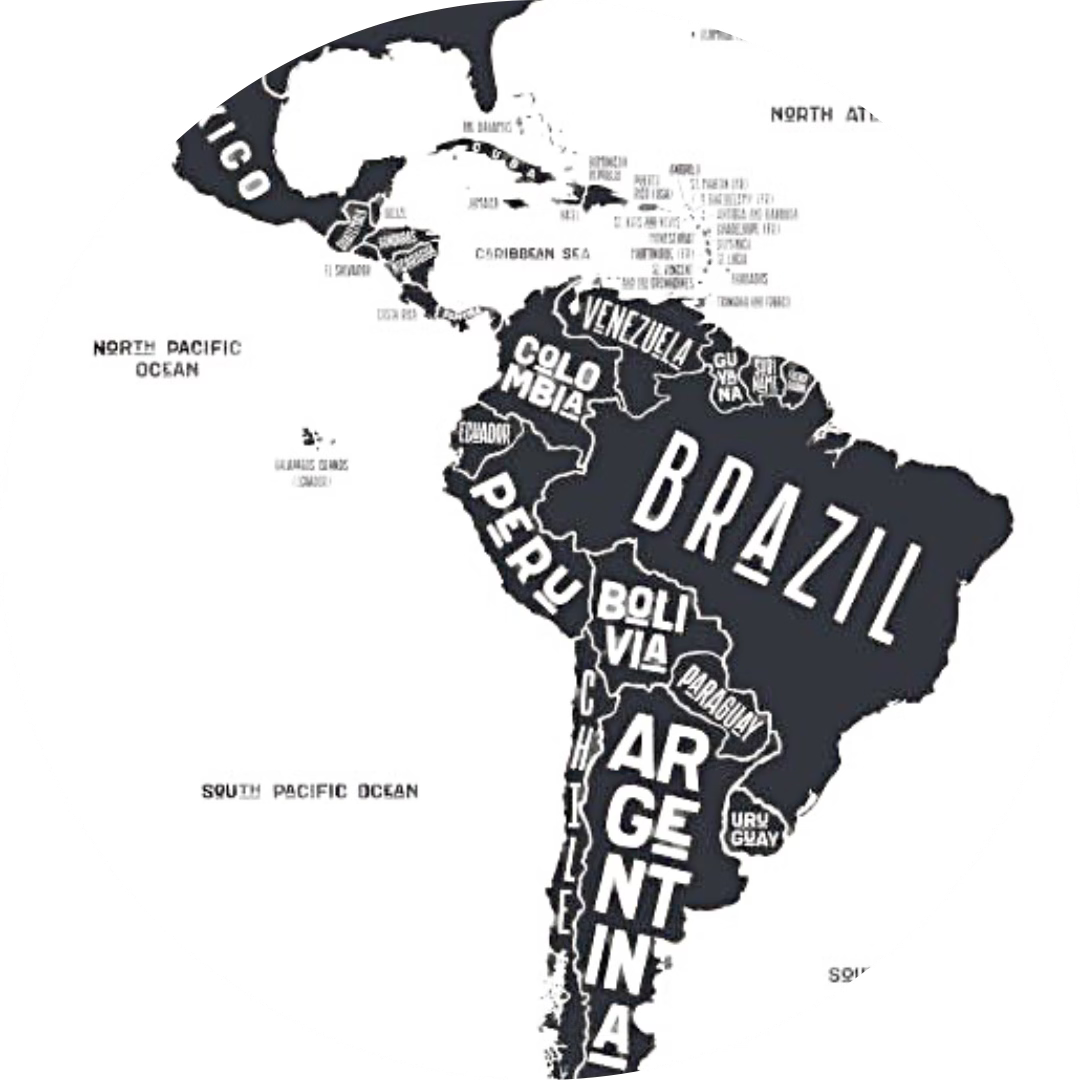
End of an Era: Last Nike and Adidas Sneaker Factory in Argentina Closes
The era of domestic sportswear production in Argentina has officially reached its conclusion. In late July 2026, Brazilian manufacturing group Grupo Dass permanently shut down its flagship plant in Eldorado, Misiones—the nation’s final factory manufacturing sneakers for Nike and Adidas.
The closure marks a dramatic transformation in Argentina’s footwear industry and highlights how rapidly global supply chains adapt to changing trade policies.

From Industrial Powerhouse to Final Shutdown
Opened in 2007, the Eldorado facility was once a key industrial driver for the province of Misiones. At its peak capacity, the plant:
Employed between 1,500 and 1,700 workers
Operated 60 active production lines
Supplied millions of athletic shoes across South America
However, economic pressure and changing market conditions triggered a multi-year wind-down. After closing its secondary Adidas-focused facility in Coronel Suárez in early 2025, Grupo Dass consolidated operations in Misiones. By mid-2026, dwindling orders reduced the factory to just 15 lines before the final shutdown, resulting in the layoff of the remaining 150 employees.
Why Did Nike and Adidas Leave Argentine Manufacturing?
Industry analysts point to a combination of economic factors that made local manufacturing unviable:
Trade Liberalization: Eased import regulations made importing finished goods vastly cheaper than producing them domestically.
Elevated Operating Costs: High domestic production overhead reduced price competitiveness.
Offshore Sourcing Strategy: Sportswear giants Nike and Adidas redirected sourcing to larger, lower-cost manufacturing hubs in Brazil and Asia.
What’s Next for Grupo Dass and Argentine Consumers?
While manufacturing has ceased, Grupo Dass is not exiting the market completely. The company is pivoting toward a commercial and logistics model, importing and distributing global brands like Fila, Umbro, and Asics across Argentina.
For local consumers, Nike and Adidas footwear will remain readily available on store shelves—though none will bear the traditional “Made in Argentina🇦🇷“ label.
👉🏼🧨🇦🇷 Read the full story behind


AI Tools in Project Missions
Step into the AI Arsenal: the cutting-edge generative tools we deploy in client projects, internal operations, and partner collaborations—tested, trusted, and ready for battle.
Understanding the Evolution of Agentic AI in Business Strategy
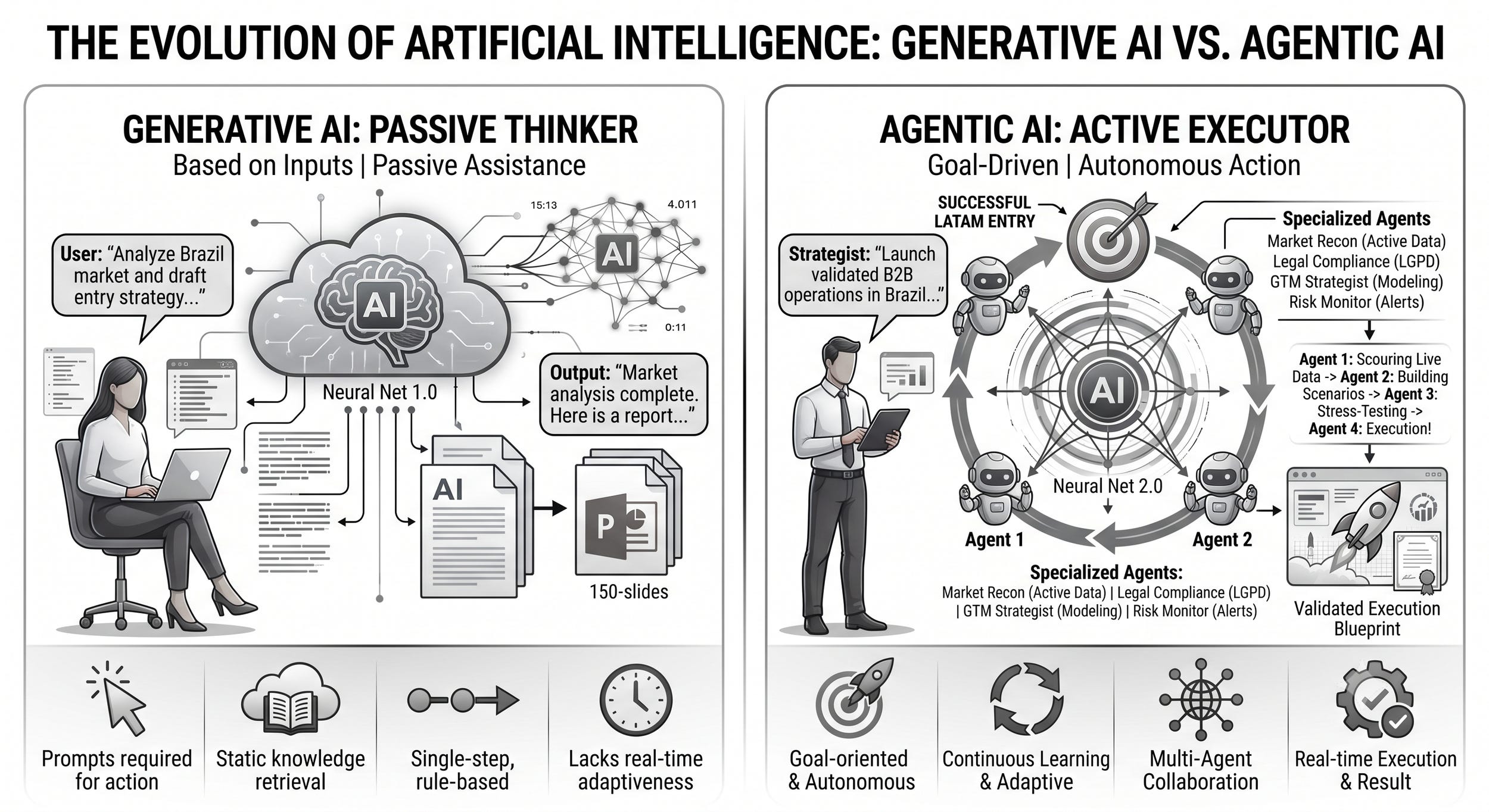
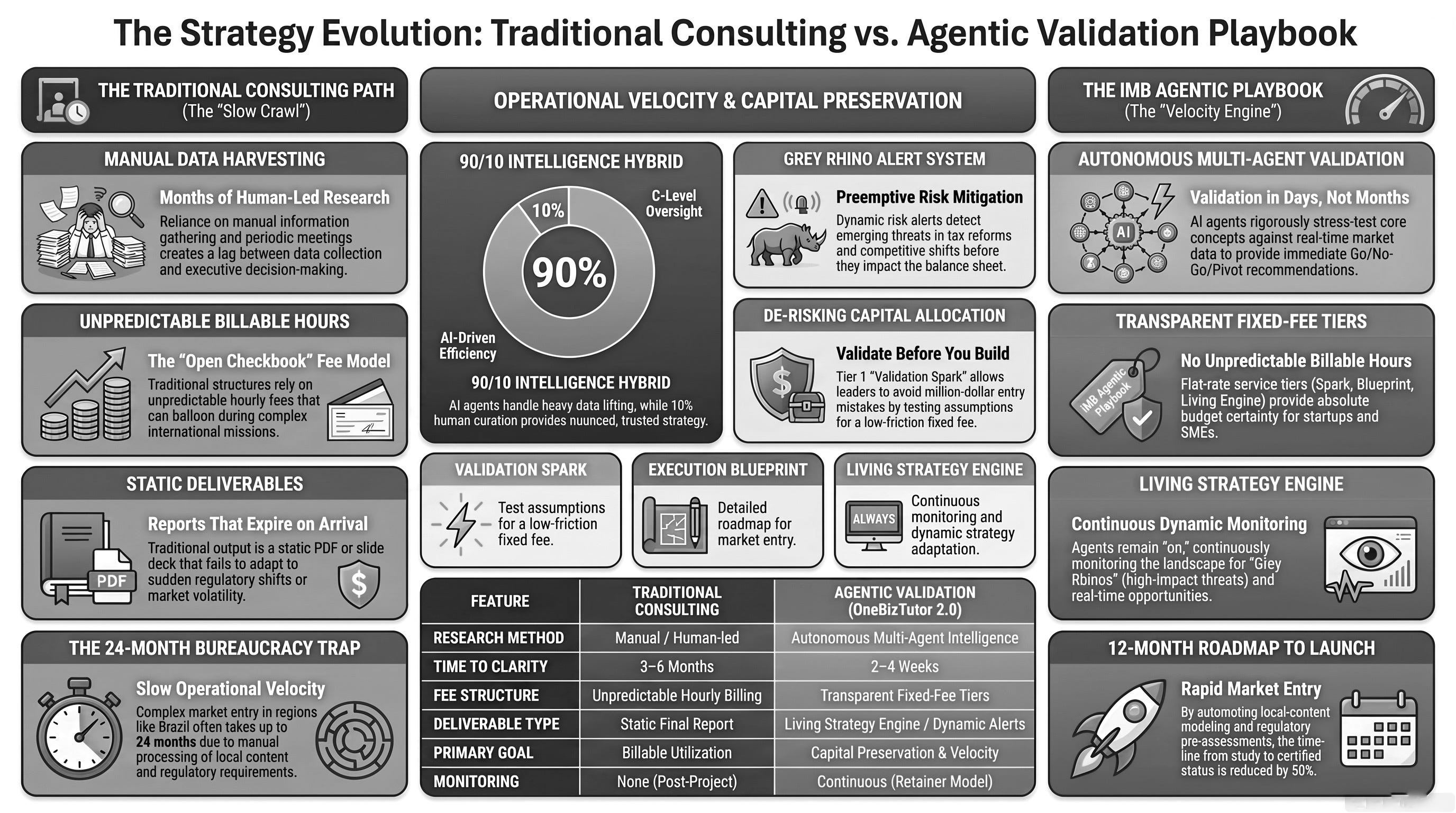
The landscape of corporate strategy is undergoing a fundamental paradigm shift from static generative AI tools to active, autonomous Agentic AI systems. While traditional generative AI operates on a reactive, prompt-and-response basis, Agentic AI represents a self-directed silicon workforce capable of goal setting, autonomous decision-making, and continuous environmental monitoring.
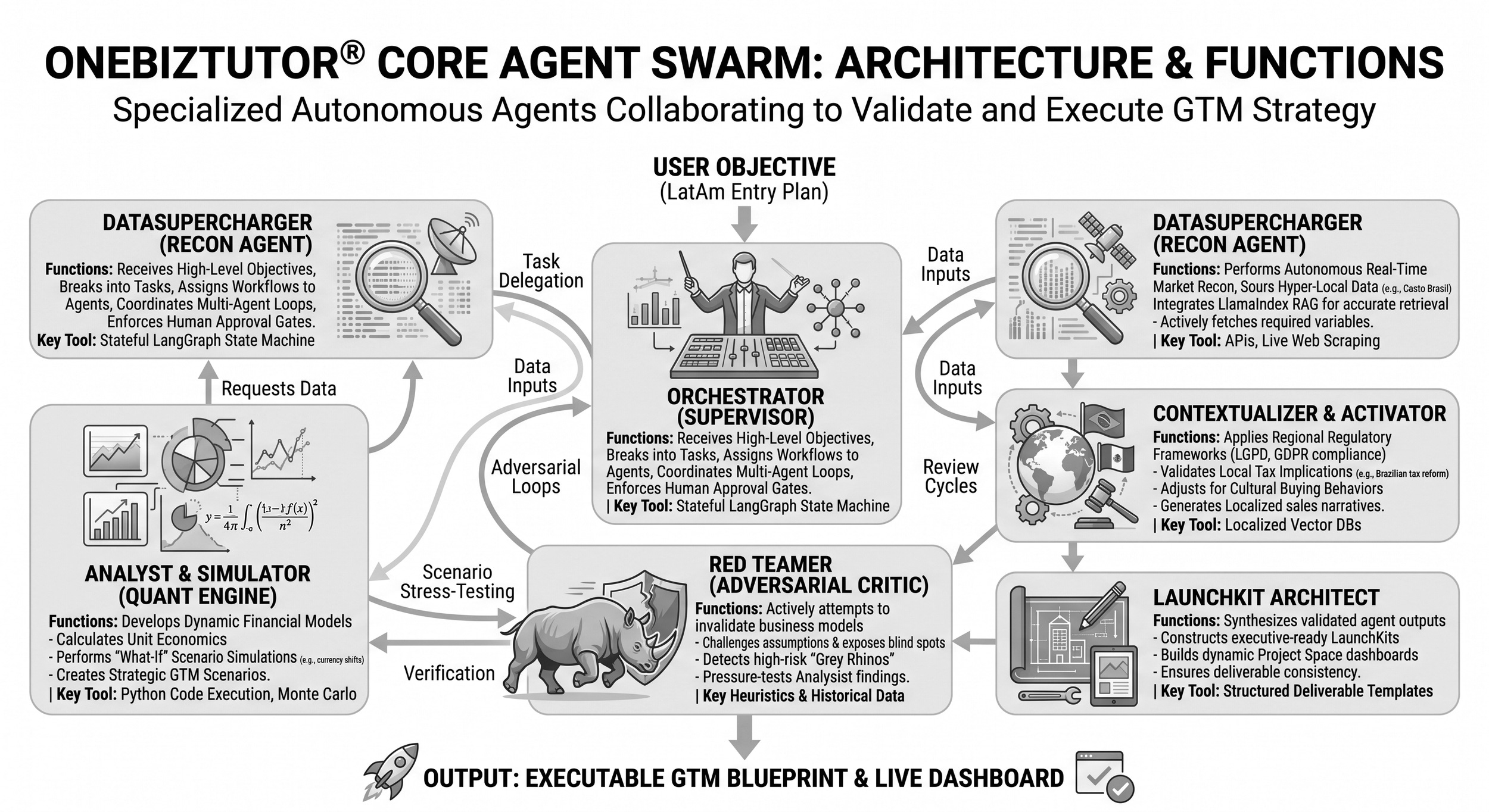
In the business context, this evolution is exemplified by platforms like OneBizTutor® 2.0, an upgraded next-generation agentic AI platform engineered specifically for rapid market entry and business model validation. Developed by iMB.Solutions—an independent corporate execution partnership founded in 2005 by industry experts Frank P. Neuhaus and Auricio dos Santos—this technology merges advanced digital architectures with decades of C-level interim management oversight.
Traditional AI vs. Autonomous Strategy Engines
To understand the strategic value of this transition, the following comparative matrix contrasts traditional generative systems with next-generation autonomous strategy engines:
Core Pillars of Agentic Strategy Execution
Following the real-world implementations by iMB.Solutions, the transition to Agentic AI relies on three core capabilities (examples from project missions 2025/26):
Real-Time Validation (The Spark): AI agents dynamically stress-test business concepts and market-entry assumptions against live data. Rather than relying on outdated market research, agents provide immediate Go/No-Go/Pivot recommendations.
Stress-Testing and Scenario Analysis: The system simulates volatile environments—such as navigating local regulatory compliance (like Custo Brasil), nearshoring logistics along the USMCA corridor, or tax structures—to identify hidden operational risks before capital is committed.
Continuous Monitoring (The Living Engine): Unlike traditional consulting reports that gather dust, agent-native systems are left “on”. They continuously scan the competitive landscape, identify emerging market threats (such as “Grey Rhinos”), and alert executive leadership in real time.
The Human-in-the-Loop Hybrid Governance Model
A key insight highlighted in the new OneBizTutor® 2.0 is that Agentic AI is not designed to replace executive decision-making, but to hyper-accelerate it. By combining the speed of an autonomous multi-agent swarm with the experienced oversight of seasoned C-level leaders, businesses can secure investor-ready, validated business models in days rather than months.
Under the leadership of Frank P. Neuhaus, who trained as a Digital Engineer at the HassoPlattner Institute, and the iMB.Solutions Ltda. experts in restructuring, production management, reorganization and financial management, this hybrid intelligence model ensures that data-driven autonomous insights are translated directly into pragmatic, implementation-ready results.

Contact

🚀 Fast Impact, No Strings Attached: Why iMB.Solutions Is Your Next Strategic Move

Unlock Immediate Impact with iMB.Solutions
📍 When timing, precision, and execution matter most—our manager on-demand (interim and project management for business development, reorganization and business model transformation for international project missions) step in with zero ramp-up, 100% focus, and full accountability.
Why Work With Us?
✅ Immediate Availability – We’re ready when you are
✅ Quick Start-Up – Projects kick off in days, not weeks
✅ Focused Execution – Sharp minds. No distractions.
✅ Goal-Oriented Delivery – We solve, not circle
✅ Updated Expertise – Managers with up-to-date skills and vision
✅ Cost Clarity – Transparent pricing, no hidden costs
✅ Efficient Reporting – Milestone-driven, results-focused
✅ No Termination Costs – No severance, no HR entanglements
Our Collaboration Process
🔹 Step 1: Compatibility Meeting
Meet with your potential manager on-demand—on your premises if possible—to test cultural fit, skills, and creativity. You discuss your situation, simulate potential solutions, and assess alignment.
🔹 Step 2: Strategic Snapshot
Want more certainty? We offer an in-depth diagnostic using our proprietary tools (business development, commercial, reorganization + plant operations). In 3–7 days, we deliver a feasibility study and actionable report—fast, focused, and fixed-fee.
🔹 Step 3: Let’s Execute
If it’s a match, we define the mission scope, set milestones, agree on reporting and confidentiality terms, and negotiate a fair, value-based compensation. It’s your roadmap to results.
What You Get:
🎯 Rapid onboarding
🎯 Zero HR complexity
🎯 Precision-driven delivery
📩 Ready for a high-impact partnership?
Let’s start the conversation. Your challenge deserves more than consultants—it deserves hands-on leadership.
👉 Contact Us
independent management on-demand | interim management | business development | reorganization | transformation | LatAm | Brazil | Mexico/USMCA
| stay safe on your project trail |
Discover What Matters Most to You—Backed by 150+ Project Missions!
Curious about the impact of our insights at iMB.Solutions? We put our articles, blogs, and case studies to the test—running three independent AI-driven queries with Perplexity, Google Gemini, and Mistral. The result? A powerful keyword cloud reflecting the topics that truly resonate.
Do you see yourself in these trends? Let’s connect and explore how our expertise—shaped by 150+ project missions over two decades—can drive your success.