
Executive Briefing
The Audio Overview “Surviving the Deregulation Paradox in Argentina” provides an in-depth audio synthesis of primary intelligence gathered from 196 multinational executives, founders, and operating directors. Processed via the OneBizTutor® AI platform, the show breaks down how Argentina’s radical economic shift under President Javier Milei has created a Deregulation Paradox. Rather than eliminating red tape, dismantling federal oversight bodies has decentralized corruption into discretionary extortion at local customs, port terminals, and provincial borders.
This deep-dive audio format translates complex geopolitical risk analysis into clear, actionable business strategies for international C-suite executives, Chief Risk Officers, and Business Development (BD) managers operating in or expanding into South America.
1. The Operational Compliance Dilemma
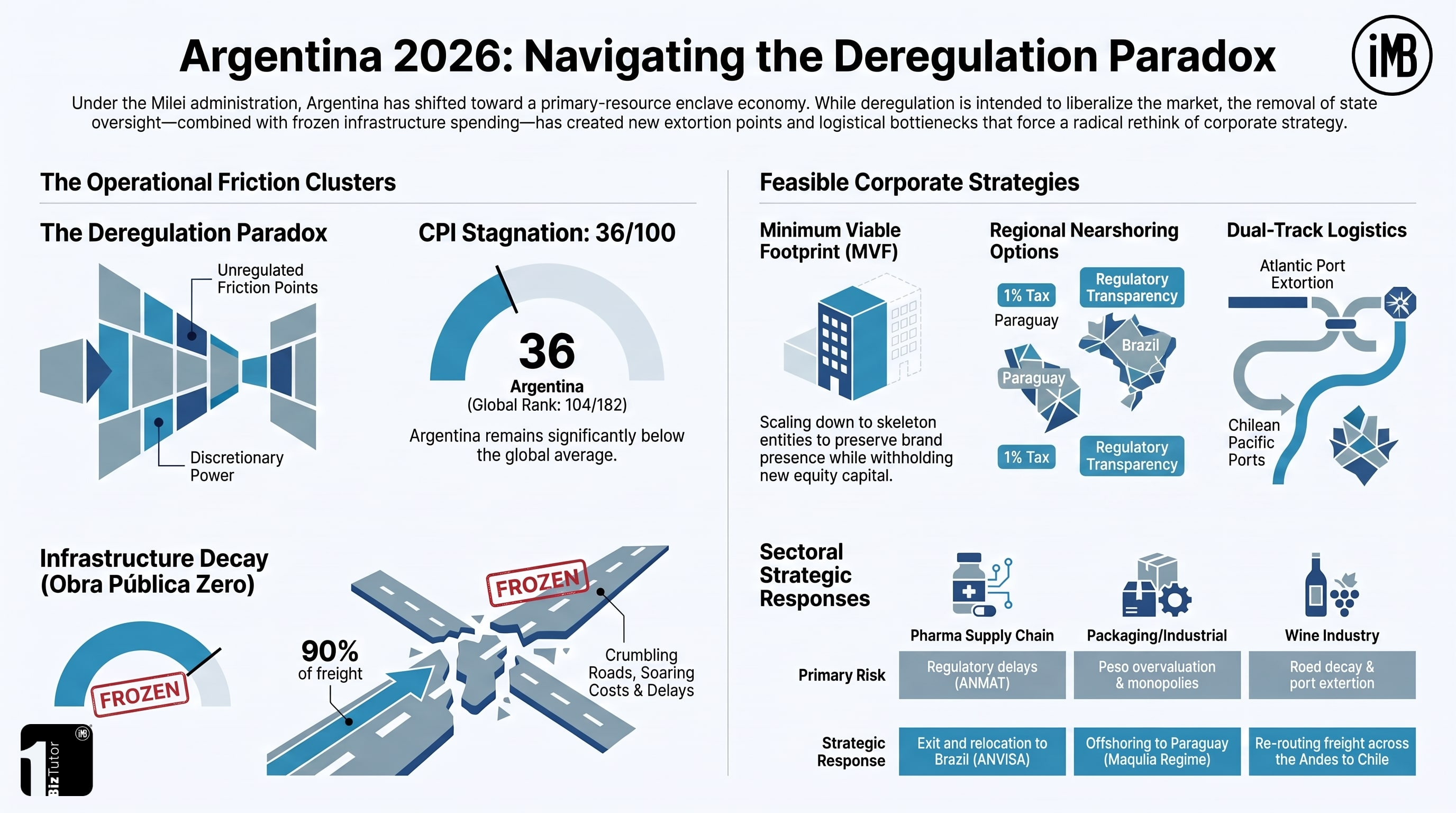
The Oversight Vacuum: Repealing laws without implementing automated, transparent digital processes has transferred arbitrary power to mid-level inspectors and provincial authorities. Argentina’s Corruption Perceptions Index (CPI) remains stalled at 36/100 (ranking 104 out of 182).
Demurrage Extortion: Inspectors at ARCA (tax/customs), SENASA, and ANMAT deploy red-channel routing (Canal Rojo) and technical hold alerts on critical spare parts. Facing demurrage and downtime costs exceeding $100,000/day, operators face intense extortion pressure.
Extraterritorial Legal Exposure: Informally expediting shipments exposes foreign parent entities to severe penalties under the US FCPA, UK Bribery Act, and Argentina’s Ley 27.401 (Corporate Criminal Liability) due to actions by third-party customs brokers (Despachantes de Aduana).
2. P&L Margin Pressure (Atraso Cambiario & Obra Pública Zero)
Dollar-Cost Inflation: A crawling peg exchange rate lagging domestic inflation causes real-term peso appreciation (Atraso Cambiario), driving up local labor, utility, and freight costs in hard USD terms.
Decaying Infrastructure: Under the Obra Pública Zero mandate, federally funded road maintenance has ceased. With an unreliable freight rail network, 90% of cargo relies on trucking, inflating vehicle damage and transit delays on arteries like Ruta Nacional 7.
3. The Four Strategic Playbooks
Minimum Viable Footprint (MVF): Downsizing non-resource industrial footprint to skeleton operations focused strictly on brand preservation, licensing, and direct distribution to preserve “option value”.
Regional Nearshoring: Relocating packaging and assembly to Paraguay under the Maquila Law 7547 (1% flat re-export tax and low-cost hydroelectric power) or moving regulated production to Brazil for ANVISA transparency.
Dual-Track Logistics: Routing exports across the Andes to Chilean Pacific ports (Valparaíso / San Antonio) from October to April to bypass Atlantic port extortion, while building 30–60 day winter buffer stocks.
RIGI Enclave Integration: Re-engineering B2B sales pipelines to serve monopsonistic RIGI-backed mega-projects in Vaca Muerta (shale gas) and lithium/copper mining, enforcing New York or English governing law and offshore hard-currency payments.